Spectroscopy Applications
Explore how researchers, manufacturers, and quality-control laboratories use StellarNet spectrometers to solve real-world measurement challenges. Our compact UV-Vis, VIS-NIR, NIR, and Raman spectroscopy systems support applications across food safety, pharmaceuticals, advanced materials, thin films, biomedical research, environmental monitoring, industrial process analysis, radiometry, and space science.
Browse the application areas below to discover customer research, technical articles, spectroscopy methods, and practical solutions for absorbance, transmission, reflectance, fluorescence, Raman, radiometric, and chemometric analysis.
Key Application Areas
Food Safety & Quality
Advanced & quantum materials
Thin Films & Optical Coatings
Pharmaceuticals & Nutraceuticals
Biomedical & Life Sciences
Environmental & Microplastics
Industrial & Process Analysis
Lighting, Displays & Radiometry
Featured Spectroscopy Application –
Astronomy, Space & Remote Sensing
Astronomy spectroscopy gives researchers a way to study light from objects and environments far beyond the laboratory. StellarNet systems support astronomical spectroscopy for research into stars, planets, meteors, and atmospheric phenomena. Spectral measurements can reveal information that cannot be seen through imaging alone. Compact instruments also open new possibilities for space spectroscopy and CubeSat missions where size and flexibility matter. From meteor and aurora research to remote sensing and educational astronomy, StellarNet provides accessible spectroscopy tools for exploring our planet and the universe beyond it.
Astronomy, Space & Remote Sensing
Looking for something else?
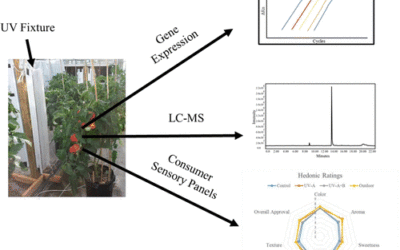
Manipulating Sensory and Phytochemical Profiles of Greenhouse Tomatoes Using Environmentally Relevant Doses of Ultraviolet Radiation
Michael P. Dzakovich, Mario G. Ferruzzi, and Cary A. Mitchell Fruits harvested from off-season, greenhouse-grown tomato plants have a poor reputation compared to their in-season, garden-grown...
The influence of sodium nanoparticles formation on luminescent properties of fluorophosphate glasses containing molecular clusters and quantum dots of lead selenide
ZO Lipatova, EV Kolobkova, AI Sidorov, NV Nikonorov - Optics and Spectroscopy, 2016 The influence of sodium nanoparticles and secondary heat treatment conditions on the spectralluminescent...
Quality evaluation of green tea leaf cultured under artificial light condition using gas chromatography/mass spectrometry
S Miyauchi, T Yonetani, T Yuki, A Tomio, T Bamba… - Journal of Bioscience and …, 2016 For an experimental model to elucidate the relationship between light quality during plant culture conditions...
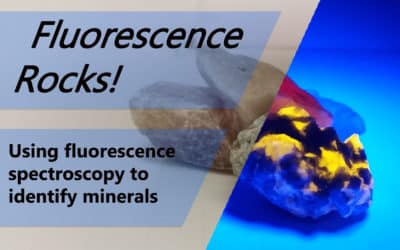
Application Note- Fluorescence Spectroscopy of Rocks and Minerals
What is Fluorescence Spectroscopy and Why is it Important? Light interacts with matter in a few basic ways: reflectance, transmission, and absorption. In some cases when light is absorbed it will be...
Three-dimensional printed miniaturized spectral system for collagen fluorescence lifetime measurements
L Zou, R Koslakiewicz, M Mahmoud, M Fahs, R Liu… - Journal of Biomedical Optics, 2016 Abstract. Various types of collagens, e.g., type I and III, represent the main load-bearing components in...
The LTCC device for miniature plasma generators characterization
J Macioszczyk, K Malecha, LJ Golonka, J Atkinson… - Microelectronics …, 2016 Purpose The purpose of this paper is a presentation of a miniature vertical DBD (dielectric barrier discharge) plasma...