Spectroscopy Applications
Explore how researchers, manufacturers, and quality-control laboratories use StellarNet spectrometers to solve real-world measurement challenges. Our compact UV-Vis, VIS-NIR, NIR, and Raman spectroscopy systems support applications across food safety, pharmaceuticals, advanced materials, thin films, biomedical research, environmental monitoring, industrial process analysis, radiometry, and space science.
Browse the application areas below to discover customer research, technical articles, spectroscopy methods, and practical solutions for absorbance, transmission, reflectance, fluorescence, Raman, radiometric, and chemometric analysis.
Key Application Areas
Food Safety & Quality
Advanced & quantum materials
Thin Films & Optical Coatings
Pharmaceuticals & Nutraceuticals
Biomedical & Life Sciences
Environmental & Microplastics
Industrial & Process Analysis
Lighting, Displays & Radiometry
Featured Spectroscopy Application –
Astronomy, Space & Remote Sensing
Astronomy spectroscopy gives researchers a way to study light from objects and environments far beyond the laboratory. StellarNet systems support astronomical spectroscopy for research into stars, planets, meteors, and atmospheric phenomena. Spectral measurements can reveal information that cannot be seen through imaging alone. Compact instruments also open new possibilities for space spectroscopy and CubeSat missions where size and flexibility matter. From meteor and aurora research to remote sensing and educational astronomy, StellarNet provides accessible spectroscopy tools for exploring our planet and the universe beyond it.
Astronomy, Space & Remote Sensing
Looking for something else?
Alexandrite spectroscopic and laser characteristic investigation within a 78–400 K temperature range
M Fibrich, J Šulc, D Vyhlídal, H Jelínková, M Čech - Laser Physics, 2017 Abstract We report on the influence of temperature on the spectroscopic and lasing properties of alexandrite () crystal. The...
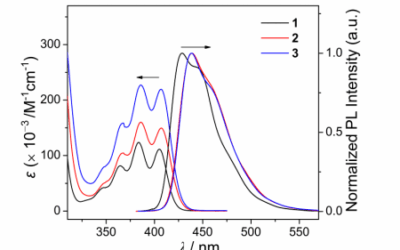
Synthesis and Electroluminescence Properties of 3-(Trifluoromethyl)phenyl-Substituted 9,10-Diarylanthracene Derivatives for Blue Organic Light-Emitting Diodes
SW Kwak, KM Lee, JE Lee, J Yoo, Y Yi, H Kwon, H Lee… - Applied Sciences, 2017 Abstract Diaryl-substituted anthracene derivatives containing 3-(trifluoromethyl)phenyl) groups,...
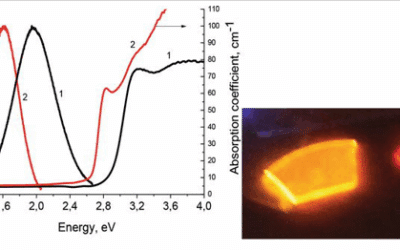
CdS(Se) and PbS(Se) Quantum Dots with High Room Temperature Quantum Efficiency in the Fluorine-Phosphate Glasses
E Kolobkova, N Nikonorov - Quantum-dot Based Light-emitting Diodes, 2017 Abstract In this study, the luminescent properties of the CdS(Se) quantum dots (QDs) with the mean size of 2–4 nm, the...
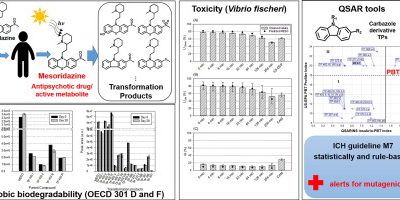
Combination of experimental and in silico methods for the assessment of the phototransformation products of the antipsychotic drug/metabolite Mesoridazine
ML Wilde, J Menz, C Leder, K Kümmerer - Science of The Total Environment, 2017 Abstract The lack of studies on the fate and effects of drug metabolites in the environment is of concern. As their...
Method for Controlling Fungal Plant Pathogens Using a Combination of UV Radiation Followed by Antagonist Application and Dark Period
WJ Janisiewicz, F Takeda - US Patent 20,170,274,106, 2017 Abstract Strawberries are available year-around from production in the field or from controlled environments (e.g. high and low tunnel...
Unravelling Additive-based Nanocrystal Pinning for High Efficiency Organic-Inorganic Halide Perovskite Light-Emitting Diodes
MH Park, SH Jeong, HK Seo, C Wolf, YH Kim, H Kim… - Nano Energy, 2017 Abstract Organic-inorganic halide perovskite light emitting diode (PeLED) as a narrow band emitter is an emerging research...