Spectroscopy Applications
Explore how researchers, manufacturers, and quality-control laboratories use StellarNet spectrometers to solve real-world measurement challenges. Our compact UV-Vis, VIS-NIR, NIR, and Raman spectroscopy systems support applications across food safety, pharmaceuticals, advanced materials, thin films, biomedical research, environmental monitoring, industrial process analysis, radiometry, and space science.
Browse the application areas below to discover customer research, technical articles, spectroscopy methods, and practical solutions for absorbance, transmission, reflectance, fluorescence, Raman, radiometric, and chemometric analysis.
Key Application Areas
Food Safety & Quality
Advanced & quantum materials
Thin Films & Optical Coatings
Pharmaceuticals & Nutraceuticals
Biomedical & Life Sciences
Environmental & Microplastics
Industrial & Process Analysis
Lighting, Displays & Radiometry
Featured Spectroscopy Application –
Astronomy, Space & Remote Sensing
Astronomy spectroscopy gives researchers a way to study light from objects and environments far beyond the laboratory. StellarNet systems support astronomical spectroscopy for research into stars, planets, meteors, and atmospheric phenomena. Spectral measurements can reveal information that cannot be seen through imaging alone. Compact instruments also open new possibilities for space spectroscopy and CubeSat missions where size and flexibility matter. From meteor and aurora research to remote sensing and educational astronomy, StellarNet provides accessible spectroscopy tools for exploring our planet and the universe beyond it.
Astronomy, Space & Remote Sensing
Looking for something else?
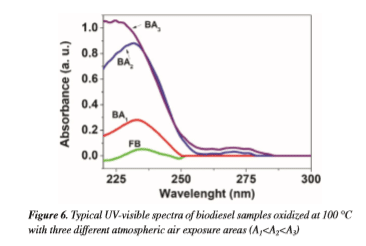
THERMOGRAVIMETRIC APPROACH FOR ASSESSING THE OXIDATION LEVEL OF A BIODIESEL SAMPLE
L Díaz-Ballotea, K Gómez-Hernándeza… Department of Applied Physics, Center for Research and Advanced Studies of the National Polytechnic Institute, A. P. 73 Cordemex, Mérida, Yucatá Abstract...
The effect of biostimulants on the yield and quality of broccoli heads during storage
A Kałużewicz, T Spiżewski, W Krzesiński, A Zaworska - Nauka Przyroda Technologie Department of Vegetable Crops Poznań University of Life Sciences Abstract Background. Biostimulants are widely used...
AlGaAs-based vertical-external-cavity surface-emitting laser exceeding 4 W of direct emission power in the 740–790 nm spectral range
Hermann Kahle, Kostiantyn Nechay, Jussi-Pekka Penttinen, Antti Tukiainen, Sanna Ranta, and Mircea Guina Abstract An optically pumped vertical-external-cavity surface-emitting laser (VECSEL) for...
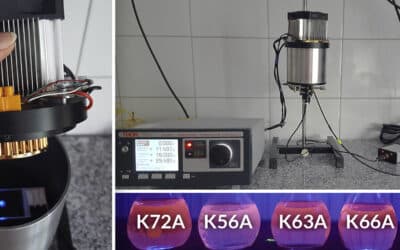
Applicability of samarium(III) complexes for the role of luminescent molecular sensors for monitoring progress of photopolymerization processes and control of the thickness of polymer coatings
M Topa, J Ortyl, A Chachaj-Brekiesz, I Kamińska-Borek… - Spectrochimica Acta Part A …, 2018 Faculty of Chemical Engineering and Technology, Cracow University of Technology, Warszawska Faculty of...
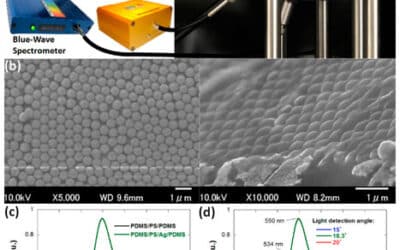
Strongly Iridescent Hybrid Photonic Sensors Based on Self-Assembled Nanoparticles for Hazardous Solvent Detection
Ayaka Sato, Yuya Ikeda, Koichi Yamaguchi and Varun Vohra - Nanomaterials 2018 Abstract Facile detection and the identification of hazardous organic solvents are essential for ensuring global safety...

SpectroElectrochemistry Lab: Redox Titration of Ferricyanide to Ferrocyanide with Ascorbic Acid
While spectroscopy is often used to directly quantify compounds in solution it can also help you measure and calculate other chemical properties. In this experiment, you will use visible...