Spectroscopy Applications
Explore how researchers, manufacturers, and quality-control laboratories use StellarNet spectrometers to solve real-world measurement challenges. Our compact UV-Vis, VIS-NIR, NIR, and Raman spectroscopy systems support applications across food safety, pharmaceuticals, advanced materials, thin films, biomedical research, environmental monitoring, industrial process analysis, radiometry, and space science.
Browse the application areas below to discover customer research, technical articles, spectroscopy methods, and practical solutions for absorbance, transmission, reflectance, fluorescence, Raman, radiometric, and chemometric analysis.
Key Application Areas
Food Safety & Quality
Advanced & quantum materials
Thin Films & Optical Coatings
Pharmaceuticals & Nutraceuticals
Biomedical & Life Sciences
Environmental & Microplastics
Industrial & Process Analysis
Lighting, Displays & Radiometry
Featured Spectroscopy Application –
Astronomy, Space & Remote Sensing
Astronomy spectroscopy gives researchers a way to study light from objects and environments far beyond the laboratory. StellarNet systems support astronomical spectroscopy for research into stars, planets, meteors, and atmospheric phenomena. Spectral measurements can reveal information that cannot be seen through imaging alone. Compact instruments also open new possibilities for space spectroscopy and CubeSat missions where size and flexibility matter. From meteor and aurora research to remote sensing and educational astronomy, StellarNet provides accessible spectroscopy tools for exploring our planet and the universe beyond it.
Astronomy, Space & Remote Sensing
Looking for something else?
Innate resistance of PSII efficiency to sunlight stress is not an advantage for cyanobacteria compared to eukaryotic phytoplankton
L Beecraft, SB Watson, REH Smith - Aquatic Ecology Abstract The effects of acute solar radiation stress on photosynthetic efficiency in freshwater unialgal cultures representing three phytoplankton...
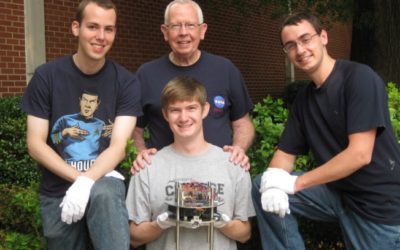
StellarNet Customer Spotlight – Launching Spectrometers and Careers
Harding RockSat-C Team standing in front of Launch Vehicle at NASA’s Wallops Flight Facility at Wallops Island launch site in Virginia. In Harding University’s Atmospheric and Space Research Team,...
Comparison of Sole-source and Supplemental Lighting on Callus Formation and Initial Rhizogenesis of Gaura and Salvia Cuttings
KJ Walters, AA Hurt, RG Lopez - HortScience, 2019 Abstract Variability in outdoor daily temperatures and photosynthetic daily light integrals (DLIs) from early spring to late fall limits the ability...
Flowering, Stem Extension Growth, and Cutting Yield of Foliage Annuals in Response to Photoperiod
KJ Walters, AA Hurt, RG Lopez - HortScience, 2019 Abstract Foliage annuals are primarily grown for the aesthetic appeal of their brightly colored, variegated, or patterned leaves rather than for...
Atmospheric Cold Plasma and Peracetic Acid–Based Hurdle Intervention To Reduce Salmonella on Raw Poultry Meat
S CHAPLOT, B YADAV, B JEON, MS ROOPESH - Journal of Food Protection, 2019 Abstract In Canada, Salmonella-related foodborne illness accounts for more than 88,000 cases annually. Poultry products...
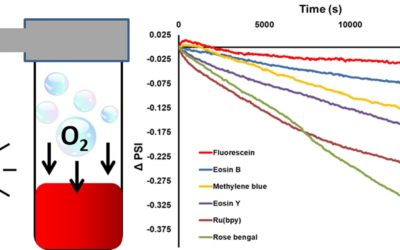
Singlet oxygen quantum yields determined by oxygen consumption
LV Lutkus, SS Rickenbach, TM McCormick - Journal of Photochemistry and …, 2019 Abstract Quantifying singlet oxygen production from triplet photosensitizers typically requires spectroscopic...