Spectroscopy Applications
Explore how researchers, manufacturers, and quality-control laboratories use StellarNet spectrometers to solve real-world measurement challenges. Our compact UV-Vis, VIS-NIR, NIR, and Raman spectroscopy systems support applications across food safety, pharmaceuticals, advanced materials, thin films, biomedical research, environmental monitoring, industrial process analysis, radiometry, and space science.
Browse the application areas below to discover customer research, technical articles, spectroscopy methods, and practical solutions for absorbance, transmission, reflectance, fluorescence, Raman, radiometric, and chemometric analysis.
Key Application Areas
Food Safety & Quality
Advanced & quantum materials
Thin Films & Optical Coatings
Pharmaceuticals & Nutraceuticals
Biomedical & Life Sciences
Environmental & Microplastics
Industrial & Process Analysis
Lighting, Displays & Radiometry
Featured Spectroscopy Application –
Astronomy, Space & Remote Sensing
Astronomy spectroscopy gives researchers a way to study light from objects and environments far beyond the laboratory. StellarNet systems support astronomical spectroscopy for research into stars, planets, meteors, and atmospheric phenomena. Spectral measurements can reveal information that cannot be seen through imaging alone. Compact instruments also open new possibilities for space spectroscopy and CubeSat missions where size and flexibility matter. From meteor and aurora research to remote sensing and educational astronomy, StellarNet provides accessible spectroscopy tools for exploring our planet and the universe beyond it.
Astronomy, Space & Remote Sensing
Looking for something else?
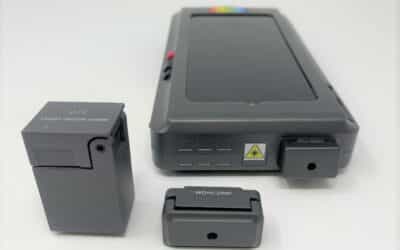
Introducing the updated StellarRAM Handheld Raman System!
StellarNet introduces the newest version of our handheld Raman spectrometer now available and “in stock” for convenient on-site inspection of unknown materials. Pharmaceuticals, narcotics,...
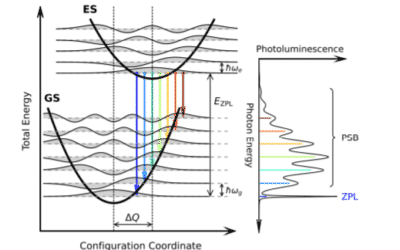
Photoluminescence spectra of point defects in semiconductors: validation of first principles calculations
Yu Jin, Marco Govoni, Gary Wolfowicz, Sean E. Sullivan, F. Joseph Heremans, David D. Awschalom, and Giulia Galli Abstract Optically and magnetically active point defects in semiconductors are...
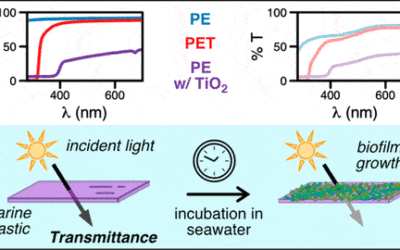
Product Formulation Controls the Impact of Biofouling on Consumer Plastic Photochemical Fate in the Ocean
Taylor F. Nelson, Christopher M. Reddy , and Collin P. Ward Abstract The photodegradation rates of floating marine plastics govern their environmental lifetimes, but the controls on this...
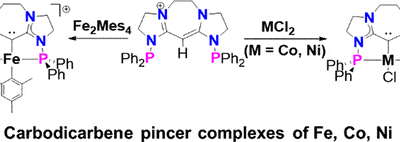
Synthesis and Characterization of Bis(phosphine)carbodicarbene Complexes of Iron, Cobalt, and Nickel
Shengwei Zhang and Jeremy P. Krogman Abstract The synthesis and characterization of nickel, cobalt, and iron complexes of the bis(phosphine)carbodicarbene (CDC) ligand 1 is described. The...
The SpectraWizard’s Spectroscopy Application Challenge Results 2021
The SpectraWizard’s Spectroscopy Application Challenge has now officially ended! Spectroscopists from all over the world competed against each other for a chance to win over $5,000 in StellarCash....
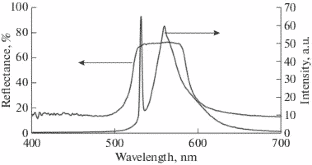
The Polarization of Laser Generation from the Cholesteric Liquid Crystal–Dye-Doped Polymer Layer–Cholesteric Liquid Crystal System
T. M. Sarukhanyan Abstract The state of polarization is an important feature of any laser emission. The polarization of light is important for the processing of laser beams in...