Spectroscopy Applications
Explore how researchers, manufacturers, and quality-control laboratories use StellarNet spectrometers to solve real-world measurement challenges. Our compact UV-Vis, VIS-NIR, NIR, and Raman spectroscopy systems support applications across food safety, pharmaceuticals, advanced materials, thin films, biomedical research, environmental monitoring, industrial process analysis, radiometry, and space science.
Browse the application areas below to discover customer research, technical articles, spectroscopy methods, and practical solutions for absorbance, transmission, reflectance, fluorescence, Raman, radiometric, and chemometric analysis.
Key Application Areas
Food Safety & Quality
Advanced & quantum materials
Thin Films & Optical Coatings
Pharmaceuticals & Nutraceuticals
Biomedical & Life Sciences
Environmental & Microplastics
Industrial & Process Analysis
Lighting, Displays & Radiometry
Featured Spectroscopy Application –
Astronomy, Space & Remote Sensing
Astronomy spectroscopy gives researchers a way to study light from objects and environments far beyond the laboratory. StellarNet systems support astronomical spectroscopy for research into stars, planets, meteors, and atmospheric phenomena. Spectral measurements can reveal information that cannot be seen through imaging alone. Compact instruments also open new possibilities for space spectroscopy and CubeSat missions where size and flexibility matter. From meteor and aurora research to remote sensing and educational astronomy, StellarNet provides accessible spectroscopy tools for exploring our planet and the universe beyond it.
Astronomy, Space & Remote Sensing
Looking for something else?
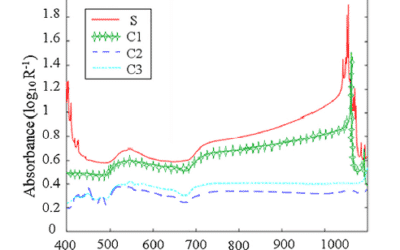
Achieving a robust Vis/NIR model for microbial contamination detection of Persian leek by spectral analysis based on genetic, iPLS algorithms and VIP scores
Sahar Rahi, Hossein Mobli, Bahareh Jamshidi, Aslan Azizi, Mohammad Sharifi Abstract Microbial contamination of vegetables is always known as a major food safety challenge. Persian leek is one of the...
Inactivation of Salmonella and quality changes in wheat flour after pulsed light-emitting diode (LED) treatments
Samir Subedi, Lihui Du, Amritha Prasad, Barun Yadav, and M.S.Roopesh Abstract Several low water activity (aw) foods have been recently associated with Salmonella related outbreaks and recalls. The...
Inactivation of Salmonella on black peppercorns using an integrated ultraviolet-C and cold plasma intervention
In Hee Bang, Jiwon In, Sea C.Min Abstract A nonthermal process that applies ultraviolet (UV)–C and helium cold plasma (CP) simultaneously (UV-CP) has been investigated as an intervention technology...
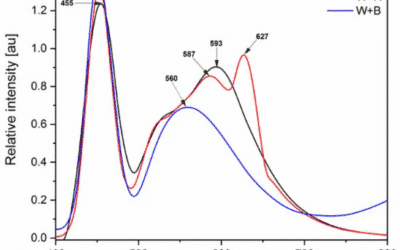
The Preferences of Different Cultivars of Lettuce Seedlings (Lactuca sativa L.) for the Spectral Composition of Light
Barbara Frąszczak and Monika Kula-Maximenko Abstract The spectrum of light significantly influences the growth of plants cultivated in closed systems. Five lettuce cultivars with different leaf...
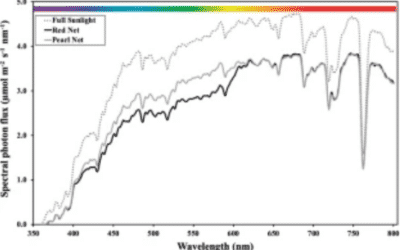
Sunburn control by nets differentially affects the antioxidant properties of fruit peel in ‘Gala’ and ‘Fuji’ apples
Héctor Olivares-Soto, Richard M. Bastías, Arturo Calderón-Orellana & María Dolores López Abstract Netting has been widely used in recent years to protect apple fruit from solar injury. There is...
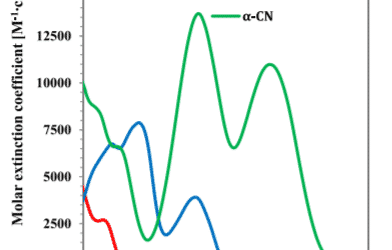
One-Component Cationic Photoinitiators from Tunable Benzylidene Scaffolds for 3D Printing Applications
Filip Petko, Mariusz Galek, Emilia Hola, Roman Popielarz, and Joanna Ortyl Abstract This paper describes a series of novel benzylidene scaffold-based iodonium salt one-component photoinitiators...