Spectroscopy Applications
Explore how researchers, manufacturers, and quality-control laboratories use StellarNet spectrometers to solve real-world measurement challenges. Our compact UV-Vis, VIS-NIR, NIR, and Raman spectroscopy systems support applications across food safety, pharmaceuticals, advanced materials, thin films, biomedical research, environmental monitoring, industrial process analysis, radiometry, and space science.
Browse the application areas below to discover customer research, technical articles, spectroscopy methods, and practical solutions for absorbance, transmission, reflectance, fluorescence, Raman, radiometric, and chemometric analysis.
Key Application Areas
Food Safety & Quality
Advanced & quantum materials
Thin Films & Optical Coatings
Pharmaceuticals & Nutraceuticals
Biomedical & Life Sciences
Environmental & Microplastics
Industrial & Process Analysis
Lighting, Displays & Radiometry
Featured Spectroscopy Application –
Astronomy, Space & Remote Sensing
Astronomy spectroscopy gives researchers a way to study light from objects and environments far beyond the laboratory. StellarNet systems support astronomical spectroscopy for research into stars, planets, meteors, and atmospheric phenomena. Spectral measurements can reveal information that cannot be seen through imaging alone. Compact instruments also open new possibilities for space spectroscopy and CubeSat missions where size and flexibility matter. From meteor and aurora research to remote sensing and educational astronomy, StellarNet provides accessible spectroscopy tools for exploring our planet and the universe beyond it.
Astronomy, Space & Remote Sensing
Looking for something else?
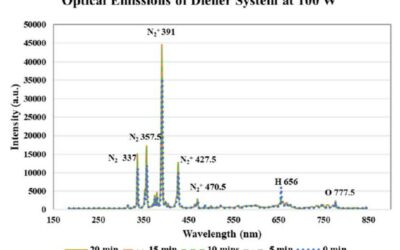
Plasma sanitization of cherry belle radish seeds for Space agricultural applications
Ryan P Gott, K. W Engeling, Christina M Johnson, Haley O Boles, Victoria C Brown, Mary Hummerick, Gioia D Massa and Annie J Meier Abstract As human innovation continuously expands the knowledge base...
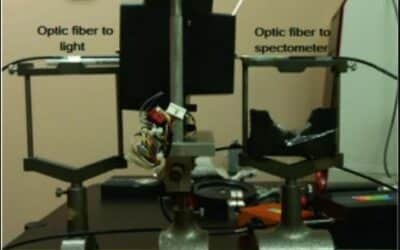
Blue Light Spectroscopy from Electronic Visual Displays
N. Correa, E. Spezzia, R. Doti, J. Faubert & J. E. Lugo Abstract This work reports a collection of experiments having the purpose of understanding if a digital induced filtering process could...
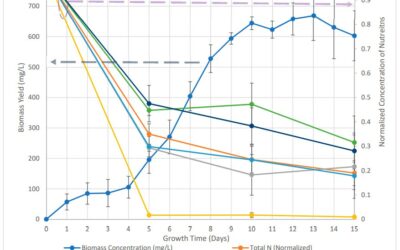
Algal Remediation of Wastewater Produced from Hydrothermally Treated Septage
Kyle McGaughy, Ahmad Abu Hajer, Edward Drabold, David Bayless, and M.Toufiq Reza Abstract Hydrothermal carbonization (HTC) is a promising technology to convert wet wastes like septic tank wastes, or...
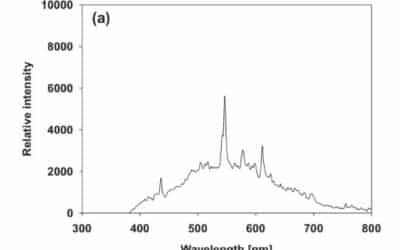
Blue-green light is required for a maximized fatty acid unsaturation and pigment concentration in the microalga Acutodesmus obliquus
Mark Helamieh, Marco Reich, Sophie Bory, Philipp Rohne, Ulf Riebesell, Martin Kerner, Klaus Kümmerer Abstract Blue-green light is known to maximize the degree of fatty acid (FA) unsaturation in...
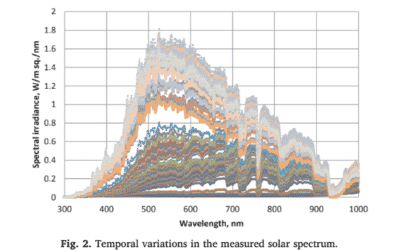
Modeling the impact of spectral irradiance and average photon energy on photocurrent of solar modules
Yatindra Kumar Ramgolam, Krishnaraj Madhavjee Sunjiv Soyjaudah Abstract Photocurrent generated by a solar cell depends on environmental conditions as well as electrical and technological parameters...
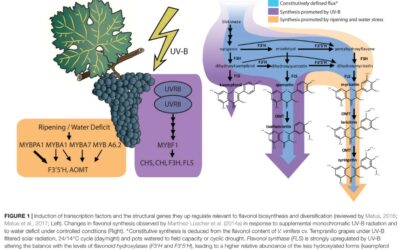
Flavonol Profile Is a Reliable Indicator to Assess Canopy Architecture and the Exposure of Red Wine Grapes to Solar Radiation
Johann Martínez-Lüscher, Luca Brillante, and Sahap Kaan Kurtural Abstract Exposure to solar radiation is a determining factor of grape composition. Flavonol synthesis is upregulated by solar...