Spectroscopy Applications
Explore how researchers, manufacturers, and quality-control laboratories use StellarNet spectrometers to solve real-world measurement challenges. Our compact UV-Vis, VIS-NIR, NIR, and Raman spectroscopy systems support applications across food safety, pharmaceuticals, advanced materials, thin films, biomedical research, environmental monitoring, industrial process analysis, radiometry, and space science.
Browse the application areas below to discover customer research, technical articles, spectroscopy methods, and practical solutions for absorbance, transmission, reflectance, fluorescence, Raman, radiometric, and chemometric analysis.
Key Application Areas
Food Safety & Quality
Advanced & quantum materials
Thin Films & Optical Coatings
Pharmaceuticals & Nutraceuticals
Biomedical & Life Sciences
Environmental & Microplastics
Industrial & Process Analysis
Lighting, Displays & Radiometry
Featured Spectroscopy Application –
Astronomy, Space & Remote Sensing
Astronomy spectroscopy gives researchers a way to study light from objects and environments far beyond the laboratory. StellarNet systems support astronomical spectroscopy for research into stars, planets, meteors, and atmospheric phenomena. Spectral measurements can reveal information that cannot be seen through imaging alone. Compact instruments also open new possibilities for space spectroscopy and CubeSat missions where size and flexibility matter. From meteor and aurora research to remote sensing and educational astronomy, StellarNet provides accessible spectroscopy tools for exploring our planet and the universe beyond it.
Astronomy, Space & Remote Sensing
Looking for something else?
Modelling the impact of spectral irradiance and average photon energy on photocurrent of solar modules
Yatindra Kumar, Ramgolam Krishnaraj, Madhavjee SunjivSoyjaudah Abstract Photocurrent generated by a solar cell depends on environmental conditions as well as electrical and technological parameters...
Quantification of Contrast Sensitivity and Color Perception using Head-worn Augmented Reality Displays
Mark A. Livingston; Jane H. Barrow; Ciara M. Sibley Abstract Augmented reality (AR) displays often reduce the visual capabilities of the user. This reduction can be measured both objectively and...
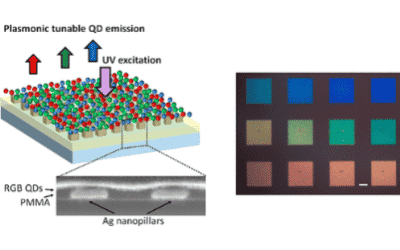
Subwavelength Plasmonic Color Tuning of Quantum Dot Emission
Darren C. J. NeoDarren C. J. Neo Institute of Materials Research and Engineering, 2 Fusionopolis Way, Innovis, #08-03, Singapore 138634 More by Darren C. J. Neo, Chengyuan Yang, Yi Shi, Qing Yang...
StellarNet Celebrates 30 Years of Developing Intelligence from Light!
StellarNet celebrates 30 years of "Developing Intelligence from Light". Since 1992, StellarNet's mini rugged spectrometers have been used all over the world in different spectroscopy applications....
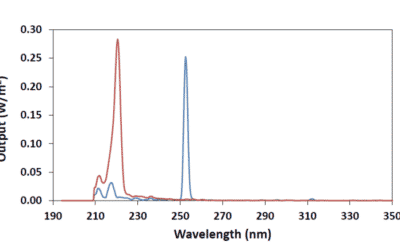
Ultraviolet-C (UV-C) for disease and pest management and automating UV-C delivery technology for strawberry
F. Takeda, W. Janisiewicz, B. Short, T. Leskey, A. Stager Abstract Alternative disease and pest management strategies are needed due to increased resistance by strawberry pathogens and arthropod...
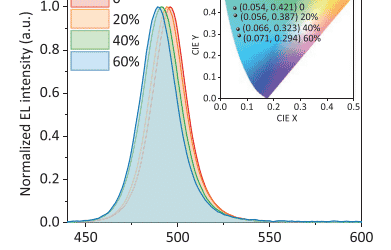
Large-Area and Efficient Sky-Blue Perovskite Light-Emitting Diodes via Blade-Coating
Shenglong Chu,Yihan Zhang,Peng Xiao,Wenjing Chen,Rongfeng Tang,Yi Shao,Tao Chen,Xiaoqiang Zhang,Fengguang Liu,Zhengguo Xiao Abstract Large-area fabrication of perovskite light-emitting diodes...