Spectroscopy Applications
Explore how researchers, manufacturers, and quality-control laboratories use StellarNet spectrometers to solve real-world measurement challenges. Our compact UV-Vis, VIS-NIR, NIR, and Raman spectroscopy systems support applications across food safety, pharmaceuticals, advanced materials, thin films, biomedical research, environmental monitoring, industrial process analysis, radiometry, and space science.
Browse the application areas below to discover customer research, technical articles, spectroscopy methods, and practical solutions for absorbance, transmission, reflectance, fluorescence, Raman, radiometric, and chemometric analysis.
Key Application Areas
Food Safety & Quality
Advanced & quantum materials
Thin Films & Optical Coatings
Pharmaceuticals & Nutraceuticals
Biomedical & Life Sciences
Environmental & Microplastics
Industrial & Process Analysis
Lighting, Displays & Radiometry
Featured Spectroscopy Application –
Astronomy, Space & Remote Sensing
Astronomy spectroscopy gives researchers a way to study light from objects and environments far beyond the laboratory. StellarNet systems support astronomical spectroscopy for research into stars, planets, meteors, and atmospheric phenomena. Spectral measurements can reveal information that cannot be seen through imaging alone. Compact instruments also open new possibilities for space spectroscopy and CubeSat missions where size and flexibility matter. From meteor and aurora research to remote sensing and educational astronomy, StellarNet provides accessible spectroscopy tools for exploring our planet and the universe beyond it.
Astronomy, Space & Remote Sensing
Looking for something else?

National Panda Bear Day – A Spectroscopy Pandamonium
In this March's Spectroscopy Special, we review one of the world's favorite animals and discuss all of the useful ways spectroscopy is currently used in Panda Bear research. From Diet analysis to...
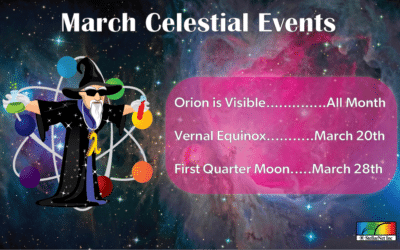
March Celestial Events Wonderful for Spectroscopy
All throughout March, unpack those binoculars and set up that telescope to view these celestial wonders. The Orion Constellation is visible to the naked eye in the southern part of the sky...
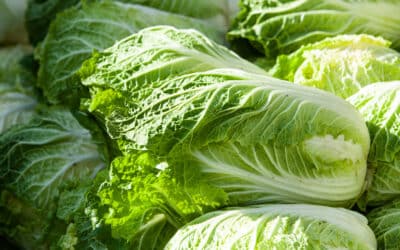
Growth, morphology, and photosynthetic activity of Chinese cabbage and lettuce grown under polyethylene and spectrum conversion films
Jun Hyeun Kang, Doyeon Kim, Hyo In Yoon & Jung Eek Son; Horticulture, Environment, and Biotechnology (January 2023) Abstract The light environment affects the growth and morphology of vegetables...
ZnO and Ag NP-decorated ZnO nanoflowers: green synthesis using Ganoderma lucidum aqueous extract and characterization
Oleksandr Smirnov, Volodymyr Dzhagan, Mariia Kovalenko, Oleksandr Gudymenko, Veronika Dzhagan, Nazar Mazur, Oksana Isaieva, Zoia Maksimenko, SerhiyKondratenk, Mykola Skoryk and Volodymyr Yukhymchuk...
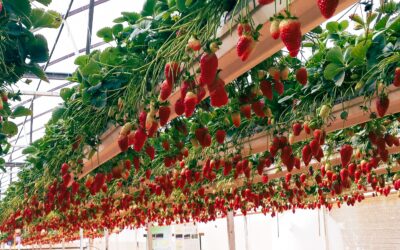
Improvement of strawberry transplant production efficiency by supplementary blue light in a plant factory using white LEDs
Hyein Lee, Seon Woo Park, Meiyan Cui, Byungkwan Lee, Duy Minh Pham, Hyunseung Hwang & Changhoo Chun Abstract The lighting source is one of the most critical environmental elements in a plant...
Blue (0.44 µm) and red (1.7 µm) diode laser activated bleaching—dental shade changes determination
T Dostálová, J Kratochvíl, H Jelínková, A Nocar and L Vavříčková ; Laser Physics Letters, Volume 20, #3 Abstract Tooth whitening or bleaching is one of the most common dental procedures that...