Spectroscopy Applications
Explore how researchers, manufacturers, and quality-control laboratories use StellarNet spectrometers to solve real-world measurement challenges. Our compact UV-Vis, VIS-NIR, NIR, and Raman spectroscopy systems support applications across food safety, pharmaceuticals, advanced materials, thin films, biomedical research, environmental monitoring, industrial process analysis, radiometry, and space science.
Browse the application areas below to discover customer research, technical articles, spectroscopy methods, and practical solutions for absorbance, transmission, reflectance, fluorescence, Raman, radiometric, and chemometric analysis.
Key Application Areas
Food Safety & Quality
Advanced & quantum materials
Thin Films & Optical Coatings
Pharmaceuticals & Nutraceuticals
Biomedical & Life Sciences
Environmental & Microplastics
Industrial & Process Analysis
Lighting, Displays & Radiometry
Featured Spectroscopy Application –
Astronomy, Space & Remote Sensing
Astronomy spectroscopy gives researchers a way to study light from objects and environments far beyond the laboratory. StellarNet systems support astronomical spectroscopy for research into stars, planets, meteors, and atmospheric phenomena. Spectral measurements can reveal information that cannot be seen through imaging alone. Compact instruments also open new possibilities for space spectroscopy and CubeSat missions where size and flexibility matter. From meteor and aurora research to remote sensing and educational astronomy, StellarNet provides accessible spectroscopy tools for exploring our planet and the universe beyond it.
Astronomy, Space & Remote Sensing
Looking for something else?
An Experimental Study of the Woody Vegetation Reflectivity Temporal Dynamics
S E Ivanov, Y V Fedotov, M L Belov, V A Gorodnichev and A A Shkarupilo S E Ivanov et al 2023 IOP Conf. Ser.: Earth Environ. Sci. 1154 012071 Abstract An experimental study of reflectivity temporal...
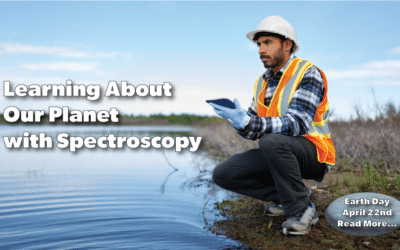
Learning about Our Planet with Spectroscopy – Earth Day 2023
Thanks to advances in spectroscopic technology, environmental scientists and researchers are afforded reliable methods to assess the impact of pollution and climate change on our natural resources...
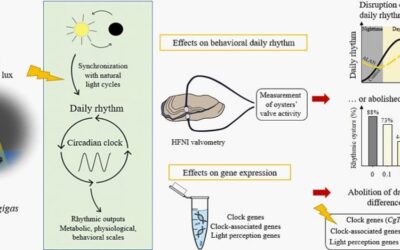
Artificial light at night at environmental intensities disrupts daily rhythm of the oyster Crassostrea gigas
Audrey Botté, Laura Payton, Damien Tran Univ. Bordeaux, CNRS, Bordeaux INP, EPOC, UMR 5805, F-33120 Arcachon, France Abstract Artificial Light At Night (ALAN) masks the natural light cycles and thus...
Effect of Soil Contamination on the Reflective Properties of Reflective Groundcovers
Stephan Bell, Achim Kunz, Lutz Damerow & Michael Blanke Abstract The objective of the present work was to study the effects of contamination on the reflective properties of groundcovers used for...
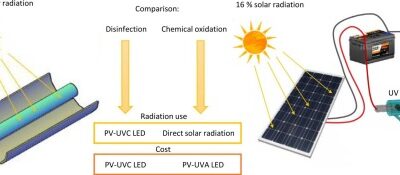
Comparing the Efficiency of Solar Water Treatment: Photovoltaic-LED vs Compound Parabolic Collector Photoreactors
Journal of Environmental Chemical Engineering, Volume 11, Issue 2, April 2023, 109332 Miguel Martín-Sómer, María Dolores Molina-Ramírez, Maria Luisa Perez-Araujo, Rafael van Grieken, Javier Marugán...

Colour Characterisation for the Restoration of a Japanese Handscroll
Sofia Ceccarelli, Martina Redi, Alessandra Terrei, Noemi Orazi, Valeria Guglielmotti, Dariush Hampai, Sultan Dabagov, Fulvio Mercuri SCIentific RESearch and Information Technology Ricerca...