What is a Hot Pixel?
A hot pixel has a higher than average dark current. This can be accounted for in the dark spectrum or by cooling. However, if the dark current is too large, the pixel might saturate prematurely. If that is the case, the pixel can be considered defective and...What is Pixel Resolution?
Pixel resolution is simply the dimensions of the detector in pixels. For StellarNet detectors, the CCD is 2048 x 1 pixels and the PDAs are 512 x 1 or 1024 x 1 pixels. Notice that they are all linear detectors. Computer monitors and TVs are also described according to...What is a spectrometer Linearity?
Linearity is a property where the pixels in a detector have a linear relationship between the number of electrons generated and the voltage produced. It only happens for a certain range in the number of electrons. Above it, the pixel saturates and the voltage stops...What is a Haze?
The appearance of transparent materials can be tuned for their applications and can be quantified by their light scattering optical properties. The cloudiness or “haze” can be defined by the percentage of light transmission which deviates from an incident beam greater...What is a Saturation?
Saturation is what happens when a pixel generates too many electrons. After a pixel exceeds its pixel well depth, the signal from the pixel stops increasing with more photons. The stored electrons can even start “leaking” into neighboring pixels and distorting the...
Introducing our new Applied Spectroscopy Division
New Handheld Raman!
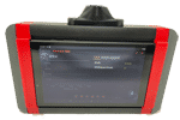
New! ChemWiz-ADK Handheld NIR Spectrophotometer with on board chemometrics and spectral matching!
Read More
Check out our SpectroChemistry Systems for UV-VIS and Fluorescence Applications
Learn More
New Spectrometer Python Application Driver
for Windows, Linux, RasPi, Mac
Check it out!
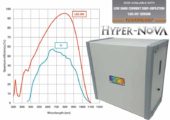
HYPER-Nova Highest Performance Raman Spectrometer
Learn More