
A private ultraviolet channel in visual communication | StellarNet.us
A private ultraviolet channel in visual communication Molly E. Cummings, Gil G. Rosenthal and Michael J. Ryan- Section of Integrative Biology, University of Texas, Austin- Boston University Marine Program Although private communication is considered an important...A field-study of inducible molecular defenses, ultraviolet radiation, and melanomagenesis in natural Xiphophorus hybrids
A field-study of inducible molecular defenses, ultraviolet radiation, and melanomagenesis in natural Xiphophorus hybrids Seth W. Coleman & Zachary W. Culumber & Ashley Meaders & Jennifer Henson & Gil G. Rosenthal Ultraviolet radiation—the primary...Aposematic Signal Variation Predicts Male-Male Interaction in Polymorphic Poison Frog
Aposematic Signal Variation Predicts Male-Male Interaction in Polymorphic Poison Frog- Nov 2010 Laura Crothers, Eben Gering, Molly Cummings- International Journal of Organic Evolution Many species use conspicuous “aposematic” signals to communicate...Female Preferences for Aposematic Signal Components in a Polymorphic Poison Frog
Female Preferences for Aposematic Signal Components in a Polymorphic Poison Frog Martine E. Maan and Molly E. Cummings, University of Texas at Austin, Integrative Biology Aposematic signals may be subject to conflicting selective pressures from predators and...Influence of plumage colour on prey response: does habitat alter heron crypsis to prey?
Influence of plumage colour on prey response: does habitat alter heron crypsis to prey? M. CLAY GREEN & PAUL L. LEBERG The foraging strategies of wading birds may be influenced by their degree of crypsis to aquatic prey. White plumage has been hypothesized to be...Introducing our new Applied Spectroscopy Division

ChemWiz-ADK
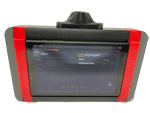
Handheld NIR Spectrophotometer with on board chemometrics and spectral matching!