Space Day: Hyperspectral Imaging on Mobile Ground Robots
Daniil Valme, Anton Rassõlkin, and Dhanushka C. Liyanage 8 April 2025 | Tallinn University of Technology, Estonia Abstract Hyperspectral imaging (HSI) has evolved from its origins in space missions to become a promising sensing technology for mobile ground robots,...Red Moon Total Lunar Eclipse Through Our StellarNet Telescope
Why Does the Moon Turn Red During a Lunar Eclipse? The Moon appears amber or red during a total lunar eclipse due to Rayleigh scattering and the refraction of sunlight through Earth’s atmosphere, the same process that creates colorful sunrises and sunsets. This...The StellarNet Star
This holiday season, we received an incredible surprise from our StellarNet team—a star named in our honor! The star is located in the Andromeda constellation, close to the Pegasus constellation. Its coordinates, RA/DEC: 00H 49M 48.8S +41° 04′ 44.2, place it...World Space Week Spectroscopy with StellarNet
This week (October 4th-October 10th) is World Space Week! At StellarNet, we celebrate space day everyday. Our products are spaced-themed with names such as “BLACK-Comet”, “Quasar”, “DWARF-Star”, and more! Space travel is no stranger...Celebrating Women Astronomers Day!
Today, we come together to honor and celebrate the incredible contributions of women astronomers who have played a vital role in exploring the mysteries of the universe. Their brilliance, dedication, and perseverance have paved the way for future generations of...
Introducing our new Applied Spectroscopy Division
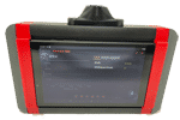
New Handheld Raman!
New! ChemWiz-ADK Handheld NIR Spectrophotometer with on board chemometrics and spectral matching!
Read More
Check out our SpectroChemistry Systems for UV-VIS and Fluorescence Applications
Learn More
New Spectrometer Python Application Driver
for Windows, Linux, RasPi, Mac
Check it out!
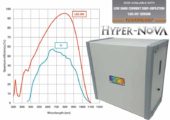
HYPER-Nova Highest Performance Raman Spectrometer
Learn More