
What is a Ultraviolet Coating (for a CCD)?
Also: Fluorophore detector coating Normal CCDs are not efficient in the UV region. However, they can be modified with an ultraviolet coating to increase the efficiency. The coating is made of a fluorescent material that converts the UV photons into lower energy...What is a Detector Efficiency Curve?
A detector efficiency curve shows how efficient a detector is at converting photons into digital signal. Below is a typical efficiency curve for StellarNet detectors: Absolute efficiency (%) is plotted versus wavelength. At ~475 nm, the efficiency is 100%. This means...What is a Detector?
A detector is a device used to record the signal in a spectroscopy experiment (or in general). For example, camera film is a type of detector. The coating on the film reacts to the light directed to it by the camera optics and records an image. Digital cameras also...What is broadband?
Broadband is an adjective used to describe light sources with a large wavelength range. While there is no clear cut numerical definition, hundreds of nanometers is usually called broadband. Many lamp sources, such as tungsten halogen lamps, are broadband. Lasers can...Introducing our new Applied Spectroscopy Division

ChemWiz-ADK
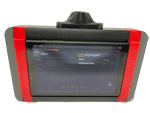
Handheld NIR Spectrophotometer with on board chemometrics and spectral matching!