What is Spectrometer Shot Noise?
Shot noise is a type of electronic noise that happens because electrons and photons are discrete particles. It arises in situations where the measurement involves counting events. In spectroscopy experiments, the event is a photon generating an electron. This process...What is Signal to Noise Ratio?
The signal to noise ratio, often abbreviated S/N, is exactly what it sounds like; it’s the ratio of the magnitude of the signal to the magnitude of the noise. Experiments need a large S/N to be able to distinguish features in the signal from the noise. If the S/N is...What is a Spectrometer’s Dark Noise?
Dark noise is the noise associated with the dark current. It is a type of shot noise where the event is a thermally generated electron. If the dark current generates N counts on the detector, the dark noise is √N. Dark noise is indirectly dependent on temperature...What is Spectrometer Noise?
Noise is a collective term for sources of unwanted signal. Some noise sources introduce systematic error, and can be corrected for, such as with a dark spectrum. Other noise sources introduce random error, and can be averaged out over several acquisitions. The...
Introducing our new Applied Spectroscopy Division
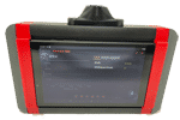
New Handheld Raman!
New! ChemWiz-ADK Handheld NIR Spectrophotometer with on board chemometrics and spectral matching!
Read More
Check out our SpectroChemistry Systems for UV-VIS and Fluorescence Applications
Learn More
New Spectrometer Python Application Driver
for Windows, Linux, RasPi, Mac
Check it out!
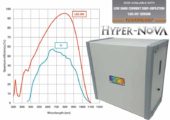
HYPER-Nova Highest Performance Raman Spectrometer
Learn More