The SpectraWizard’s Spectroscopy Application Challenge has come to a close! 🌍✨ Spectroscopists from across the globe went head-to-head for a shot at $5,000 in StellarCash. We’re thrilled to announce the winning spectroscopy application below — and don’t miss our Back to School Spectrometer Special, running now through the end of September!
A huge thank you to all who entered. With so many incredible submissions, choosing the winners was no easy task. We’re excited to finally share this standout application with you! Be sure to follow us on social media for all the latest updates.
1st Place: Emily Causi and The Carleton University Robotics Team
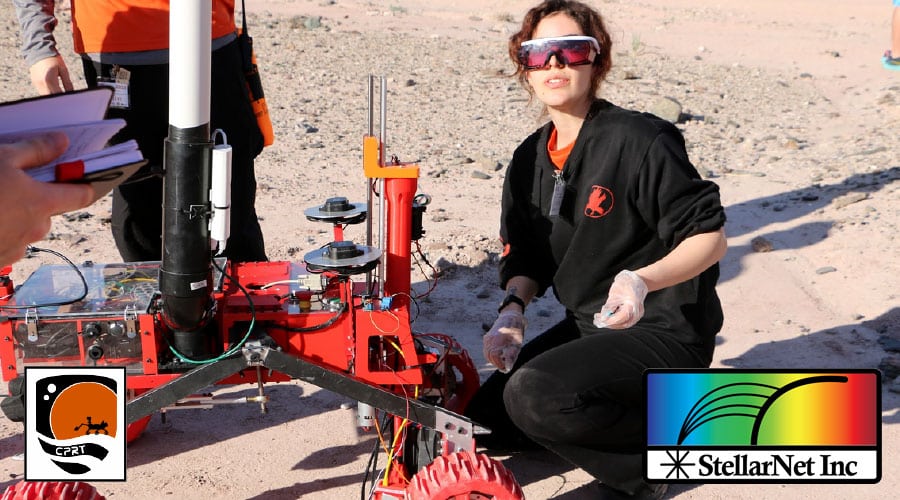
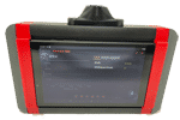
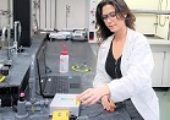
The 2025 Winner of our SpectraWizard Spectroscopy Application Challenge is Emily Causi and The Carleton University Robotics Team. They are redefining planetary exploration with their custom-built 785 nm Raman spectrometer — a powerful tool designed to uncover the molecular fingerprints of life.
Mounted on the rover’s Planetary Extraction and Analysis Tool (PEAT), the Raman spectrometer excites soil particles with laser light to reveal carbon-carbon and carbon-hydrogen bonds, including carotenoids — organic markers that can only be formed by living processes. This non-destructive analysis happens in real time, right in the field, without waiting for samples to return to a lab.
Why It Matters

- 🔬 Life Detection: The Raman spectrometer identifies sugars, carbonates, and organic compounds that point to past or present habitability.
- 🚀 Proven Technology: Successfully field-tested at the Mars Desert Research Station, it delivered spectra even in harsh, Mars-like conditions.
- 🌍 All-in-One System: Combined with chemical assays, microscopy, and environmental sensors, PEAT offers a full science suite in a compact rover module.
The CPRT’s Planetary Extraction and Analysis Tool (PEAT) brings together everything needed to study habitability in one compact system. Its custom 785 nm Raman spectrometer detects sugars, carbonates, and other organic compounds that signal past or present life.
Field-tested at the Mars Desert Research Station, it proved its strength by capturing spectra in challenging, Mars-like conditions. Paired with chemical assays, microscopy, and environmental sensors, PEAT delivers a complete, real-time science suite designed for planetary discovery.
Key Features of PEAT
The Planetary Extraction and Analysis Tool (PEAT) was built for efficiency and depth, combining multiple instruments into one rover-ready system. From Raman spectroscopy to chemical assays, microscopy, and environmental sensing, each feature works together to uncover clues of habitability and life in real time.
Highlighted Features
- 785 nm Raman Spectroscopy — the heart of the mission, detecting molecular “fingerprints” tied to biology.
- Chemical Assays — rapid carbonate detection to trace past water.
- Microscopy — imaging textures, grains, and potential microfossils.
- Environmental Sensors — tracking temperature, CO₂, and moisture for habitability context.
The Bigger Picture
With the Raman spectrometer at its core, PEAT bridges classroom innovation with real-world astrobiology. By detecting biosignatures directly on-site, the CPRT rover project moves us closer to answering the ultimate question: Are we alone?
Inspired by successful NASA rover missions, CPRT engineered a DIY system that combines drilling, spectroscopy, chemical assays, and imaging in one compact tool. Tested in the field at the Mars Desert Research Station, PEAT demonstrates how student-led innovation can deliver mission-ready science, advancing the search for life and shaping the future of planetary exploration.
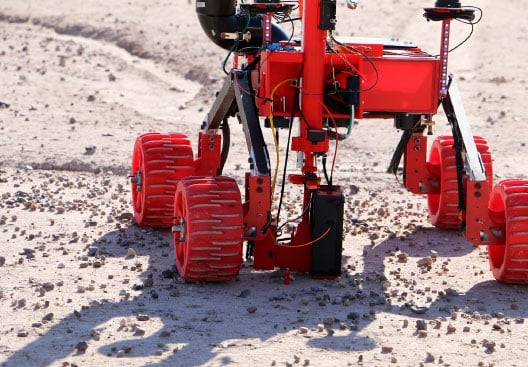
Runner-Up: Two
Dr. Luisa Cencha
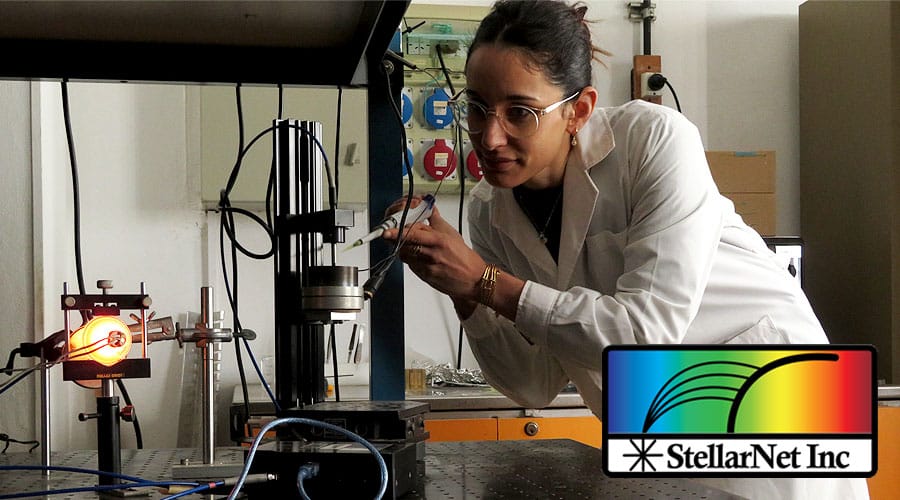
From Spectrum to Sight: Hybrid Photonic Sensors with Naked-Eye Readout
Runner-Up: Three
Grade 11 Student Engineering Contest in David Jamieson’s Classes
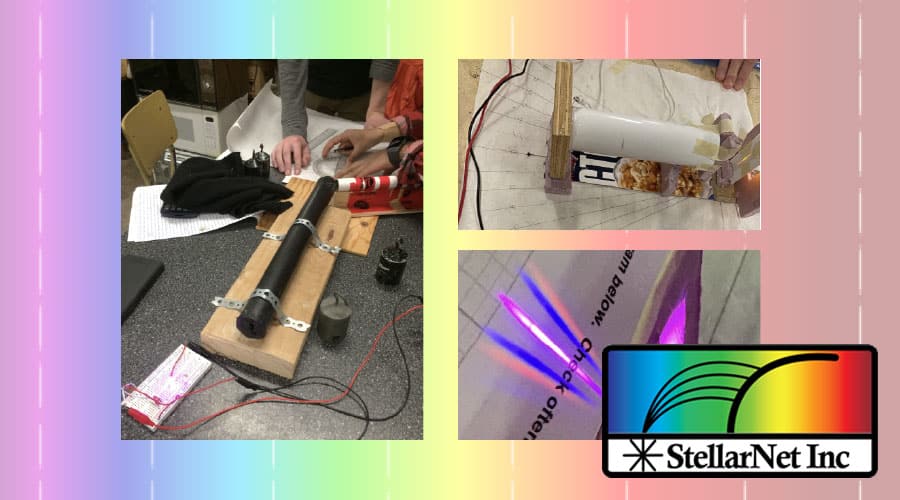
Maple Ridge Secondary Physics Classes
Compact Spectrometer Technologies
UV-VIS
190-1150nm
Near Infrared
900-2500nm
Raman
532, 785, 1064nm
Educational
low cost / simple interface