Surface modification of polytetrafluoroethylene film using single liquid electrode atmospheric-pressure glow discharge-June 2011
L Zhou, GH Lü, W Chen, H Pang, GL Zhang, and SZ Yang- Chinese Physics B, 2011
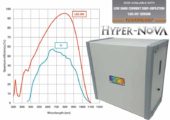
Polytetrafluoroethylene films are treated by room temperature helium atmospheric pressure plasma plumes, which are generated with a home-made single liquid electrode plasma device. After plasma treatment, the water contact angle of polytetrafluoroethylene film drops from 114° to 46° and the surface free energy increases from 22.0 mJ/m2 to 59.1 mJ/m2. The optical emission spectrum indicates that there are reactive species such as O+2, O and He in the plasma plume. After plasma treatment, a highly crosslinking structure is formed on the film surface and the oxygen element is incorporated into the film surface in the forms of —C—O—C—, —C=O, and —O—C=O groups. Over a period of 10 days, the contact angle of the treated film is recovered by only about 10°, which indicates that the plasma surface modification is stable with time … free energy of PTFE samples and its polar and dispersive components were calculated with the measured contact angles of the two liquids using the Owens- Wendt method.[31−33] The optical emission spectrum of APGD plume was investigated by Stellarnet EPP- 2000C.