

Congratulations Tampa Bay Lightning on Back to Back Stanley Cups!
Have you ever heard that lightning can’t strike twice? Tell that to our very own Tampa Bay Lightning who are now back-to-back Stanley Cup champions! StellarNet manufacturing headquarters has been located in the Tampa Bay area for over 20 years and our team members are longtime fans 😊.
While the Tampa Bay crew wears blue and white, lightning can take on many different colors depending on atmospheric conditions. Read more about what the spectrum of lightning looks like and what different colors of lightning may signify during the next thunderstorm you see.
What is Lightning?
Lightning is a rapid series of electrical discharges between the ground and a cloud or within clouds. It occurs typically during a thunderstorm but you can also find lightning during dust storms, forest fires, tornadoes, volcanic eruptions, and more. The immense current, which can be upwards of tens of thousands of amps, rapidly heats an air column just centimeters wide and up to several miles long to temperatures of 20-30,000 Celsius, several times that of the sun’s surface.
What causes Lightning to emit light?
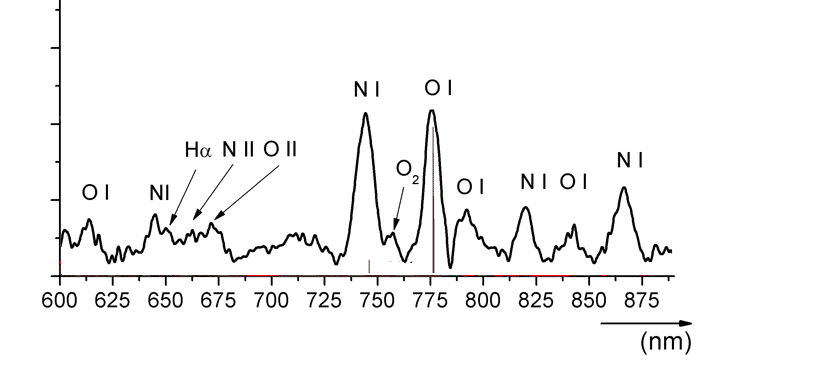
At these temperatures, air molecules are dissociated into atoms and ionized to a plasma. The spectrum below shows lines from electronic transitions of both nitrogen and hydrogen atoms. The lightning spectrum has lots of strong ion lines and atomic lines, of which the N II line and O I line are abundant. When looking at lightning through a prism you can see the colors emitted from atmospheric gases.
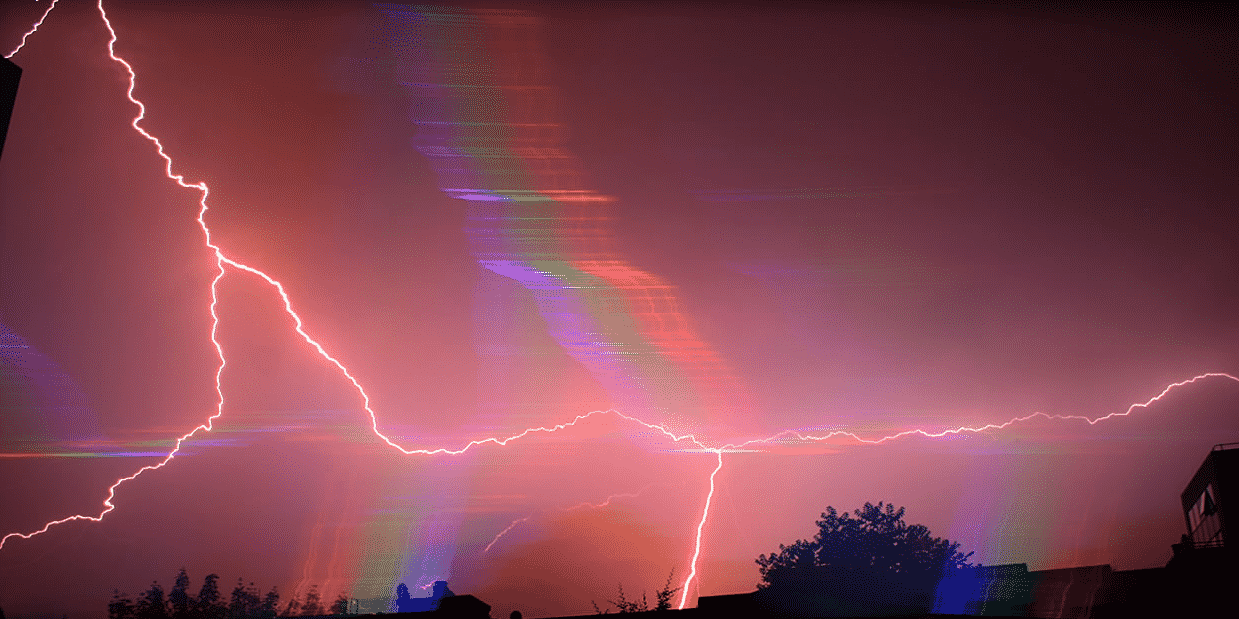
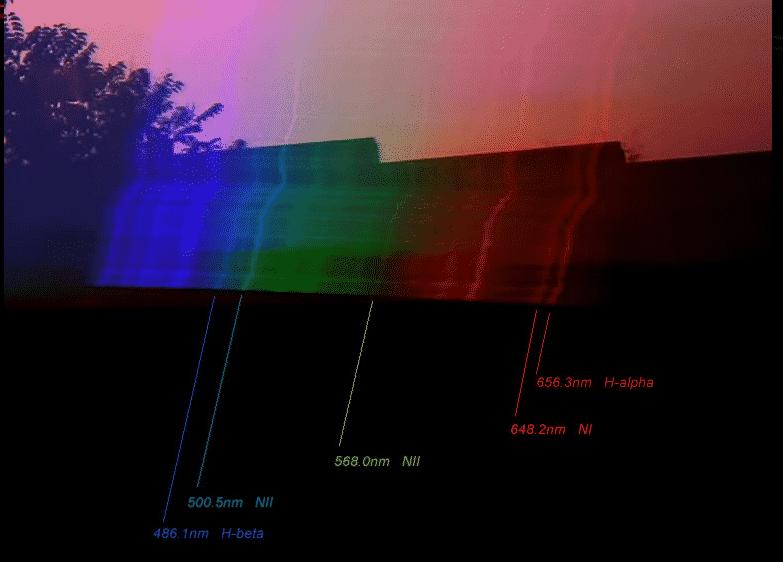
When using a spectrometer you can measure atomic and ionic electronic transitions.
Why might lightning appear red, orange, white, blue, yellow, violet, or green?
Bolts of lightning come in a variety of colors. Most often, we see white bolts of lightning, but it can take on any of the colors in the rainbow, ranging from red (in the infrared band) to violet (in the UV region). Depending on weather conditions, you might see tinges of other colors at the edges. Humidity, particles in the atmosphere, and environmental conditions contribute to the color the lightning appears. The temperature of the bolt also affects what color we see. The hotter it is, the closer to the end of the spectrum the color is. A lightning bolt’s temperature reaches as high as 50,000 degrees Fahrenheit, which is hotter than the heat on the sun’s surface. Also, the distance between the bolt and the observer impacts what they see. As the rays travel through the atmosphere to the observer, they get scattered by tiny dust particles in the air, which makes it take on different colors.
The appearance of lightning is heavily influenced by atmospheric conditions—think dust, moisture, haze, and more. For instance, when lightning strikes the ground or an object, it may appear red or orange, while the most common hue seen is white. However, bolts also shimmer in blue, yellow, violet, and even green under the right circumstances. Not only does the composition of the air play a role, but the environment and temperature of the lightning channel itself are crucial in determining its color.
So, the next time you witness a thunderstorm, keep an eye out for the dazzling spectrum on display—the color of lightning offers a vivid clue to the science at play in the skies above.
Which Type of Lightning is the Hottest and Most Dangerous?
Of all the flashes that streak across the sky, white lightning remains both the most common and the fiercest. Its dazzling brightness signals not just intensity, but temperature—it is the hottest variety, with searing heat that surpasses other hues and indicates low moisture in the atmosphere. This white-hot energy makes it particularly hazardous during storms.
On the flip side, you might spot yellow bolts from time to time. These tend to be cooler, are often associated with drier air and dusty conditions, and don’t pack the same thermal punch as their white counterparts.
Blue and purple lightning steal the show when precipitation is heavy, usually appearing during storms with rain or hail. Blue bolts are especially notorious—not only are they visually striking, but their speed and unpredictability make them a force to be respected.
As for rarities, green lightning remains elusive and is usually masked within the clouds themselves. There is only limited photographic evidence, like the famous capture during a storm in Chile.
In summary: While all lightning requires caution, those brilliant white bolts stand out as the hottest and most dangerous you can encounter.
What are the dangers associated with different colors of lightning?
While all lightning is hazardous, the color of a lightning bolt can hint at the unique risks it poses.
- White lightning is the most frequently observed and also tends to be the hottest. Its intense temperature means it carries more energy, making it especially dangerous on contact. White lightning often appears when there is low moisture in the air.
- Yellow lightning is less common and typically signals a dry thunderstorm with a higher concentration of dust in the air. Although slightly cooler than white lightning, it can still unleash serious power and shouldn’t be underestimated.
- Blue and purple lightning are usually seen during storms with heavy precipitation, such as rain or hail. The presence of additional moisture helps scatter the light into these shades, but don’t let the pretty colors fool you—these strikes can occur suddenly and are still extremely powerful.
- Green lightning is rarely witnessed and often remains hidden within clouds. There are only a few documented sightings, like a famous photograph taken in Chile. Its elusive color results from unique interactions with rain or hail inside the cloud itself.
Regardless of hue, all lightning is life-threatening, capable of causing severe injuries like burns, heart issues, and neurological effects. Whether white, blue, yellow, or another color, it’s essential to respect every thunderstorm and take proper precautions.
What do the different colors of Lightning signify?
When lightning strikes, different particles will scatter this light and cause the strike to appear as blue, pink, purple, white, or even a brownish tint. You’ll sometimes see more pinks or greens during snowstorms, as snowflakes tend to bend the light more. The colors can provide insight into what to expect during a thunderstorm:
- White lightning is the most common and also the hottest. Its intense heat means it usually indicates low concentrations of moisture in the atmosphere, and it’s considered one of the most powerful and dangerous types.
- Yellow lightning is less common and tends to be cooler than white lightning. If you see a yellow bolt, it often means you’re witnessing a dry thunderstorm or there’s a lot of dust in the air.
- Blue and purple lightning often show up when there’s rain, hail, or other forms of precipitation in the area. Blue lightning, in particular, can travel fast and strike unexpectedly, making it especially dangerous.
- Green lightning is a rare phenomenon, typically concealed within clouds, which makes it hard to spot with the naked eye. There have been rare observations in places like Chile, usually during intense storms.
- Pink or green lightning during snowstorms is a result of snowflakes bending and scattering the light, giving the strike its unique hue.
So, next time you see a flash of color across the sky, you might just be getting a sneak peek at the weather’s secrets—whether it’s dust in the air, impending rain, or a particularly powerful storm brewing overhead.
Compact Spectrometer Technologies
UV-VIS
190-1150nm
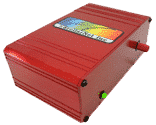
Near Infrared
900-2500nm
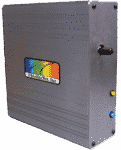
Raman
532, 785, 1064nm

Educational
low cost / simple interface