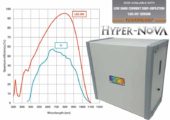
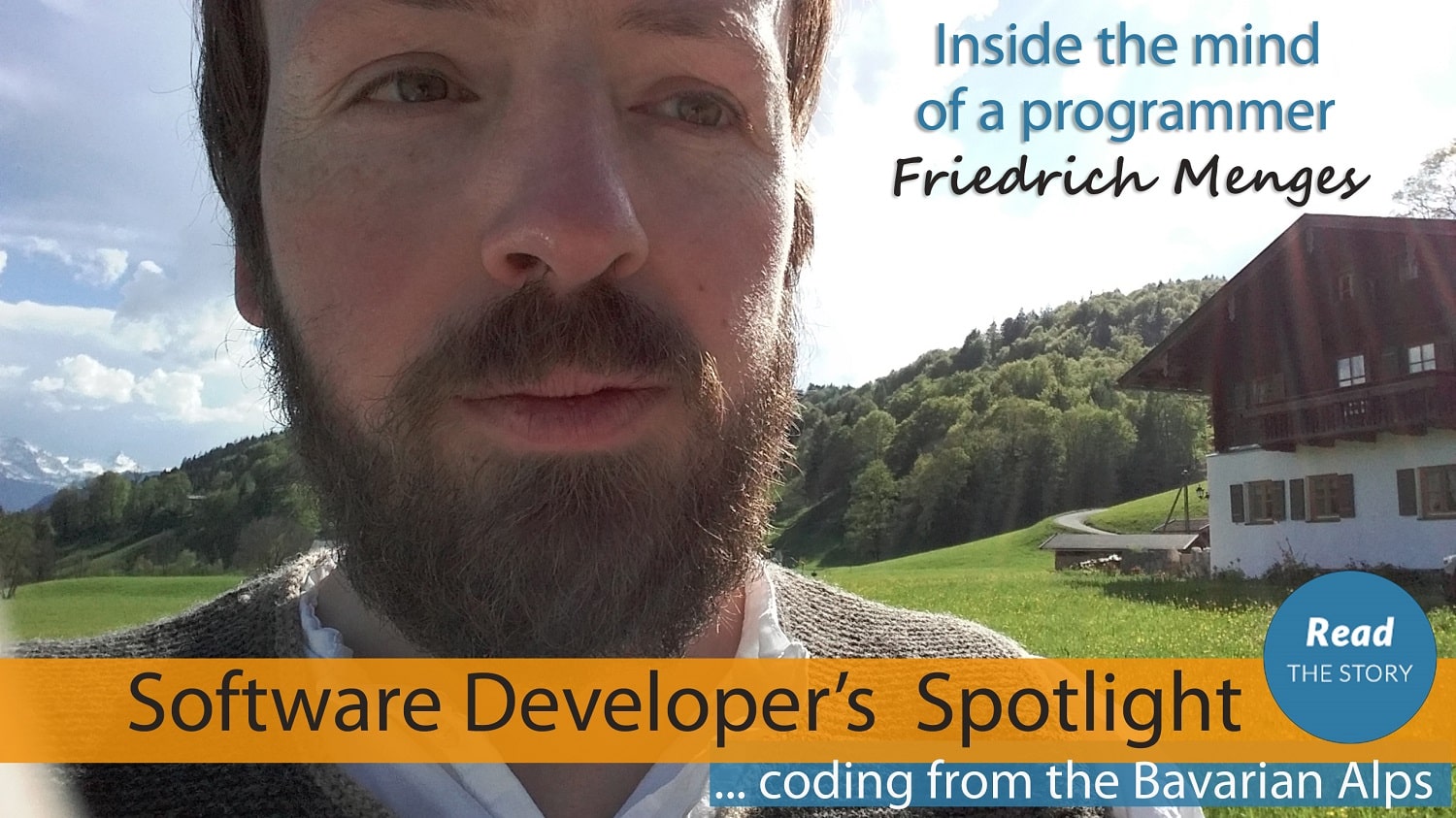
Dr. Friedrich Menges is the programmer behind StellarNet’s Spectroscopy Pro-Tools (SPT) Software package. This software is a “must have” for customers wanting a next level software to control their spectrometer and display their spectral data. SPT enables users to create amazing interactive, multi-spectrum plots, offers tons of tools for spectral processing, and can control many devices including the new high performance HYPER-Nova and most all other offered spectrometers.
Friedrich attended the University of Konstanz where he studied physical chemistry, fluorescence spectroscopy, and analytical chemistry. For 11 years after, he took part in development of robust, high-performance bioanalytics and spectroscopy systems at several companies. He then decided to become a full time programmer, releasing his own software platform focusing on creating an easy to use, robust & lean software for display, analysis, parallel processing & conversion of spectral data.
Friedrich currently resides in the Bavarian Alps and codes many different software projects. In this interview, we will ask Friedrich some intriguing questions about his background and interests in order to gain insight “INSIDE THE MIND OF A PROGRAMMER”.
What got you into writing software for spectroscopy?
When I did my master thesis in 1999, I got into a physical chemistry group doing a lot of spectroscopy on fluorescent molecules. There were both commercial and home-built spectrometers of all kind (absorbance, fluorescence, infrared, low-temperature), and it was always a pain to process all this diverse data. So there had been previous attempts in the group to create software for this purpose, like software running on mainframes (the oldest), on Amiga systems (somewhat newer) and DOS software (almost recent).
Before this, you were writing a different program (SpecWin32). What was the origin of SpecWin?
The most recent attempt was a 16bit Windows software running on Win 3.1, called Spekwin, which was done on the side by a PhD student from the lab. I had the pleasure to use this software to process spectral data for my master thesis. When I started with PhD in the same group, this guy had already left and I inherited things like being responsible for some spectrometer systems he had build and also the source code of his software, called Spekwin. So, in good tradition, I started to work on the side with maintaining and enhancing this software and soon decided to make the jump to the 32bit world, so that it may run on “modern” Windows 95 systems and called it Spekwin32. This happened in the year 2000. The first English edition of Spekwin32 came into life in 2002, I would say, and also the English website.
How long have you been programming?
While in high school, I had something like “IT 101” course (1991-1992), but nothing afterwards throughout studying. I bought my first own computer much later in 2003, I think. For starting the work on the Spekwin32 software, I simply got some programming books from the library and took a deep dive into it. So, I have no formal software development education.
Has it always been for spectroscopy?
Mostly, yes. In 2004, I wasted some time on a software doing “periodic system scrabble” on occasion of a contest searching the biggest result for words made out of element name building block. The software worked well, but I didn’t win any of the prizes. Later, as an employee, I made some occasional helper programs in the area of image processing, a logfile viewer and an installation patching software. But the major stream of work was always Spekwin32, besides my day time jobs from 2005 (when I dropped out of university) until 2016, when I was let go in my last job and went for self-employment. Which yielded the successor software Spectragryph, which in turn is the basis of SPT…
What are your other interests?
Besides my wife and three children, I might spend some time with hiking in summer and skiing in winter time. As the mountains are nearby, this can be accomplished quite well and I am able to put both work and outdoor activities into the same day. Apart from this, I like to read and listen to music and dwell into any topics that revolve around this citation from Goethe’s Faust: ‘So that I may perceive whatever holds/ The world together in its inmost folds.’
What sets SPT apart from other programs?
As it is based on Spectragryph, it was developed after the same goals:
1) Free the data from the spectrometer
2) Bring all sorts of spectra together
3) Visualize/ analyze multiple spectra at once
4) Be useful, or else get out of the user’s way
Also, it shares its Ninja features: it blends in with environment, it is fast, lean and reliable
with a small footprint.
What are the top 3 most powerful features in the program?
• The ability of quick & easy visualisation, processing and conversion of series of
spectra at the same time.
• Loading spectral data from 70 file formats from UV-VIS, NIR, FTIR, fluorescence,
Raman, LIBS and even XRF spectrometers
• Creating spectral libraries and searching unknown samples with very fast results
What features in the program are you especially proud of?
There is a lot of effort behind many features, but perhaps the most important aspect is having
it made in a way that it is powerful enough for heavy number-crunching on the highest
academic levels and still being so easy to grasp that the average DIY hobbyist spectrometer
tinkerer is comfortable within a few minutes…
What is your favorite part about working as a programmer?
All of it😊 Moving from desperate mood to winner back to desperate within the same day. Sleeping over problems and having the solution on wakeup. Working on my own product, direct communication with users and seeing your work making sense and getting used out there.
What is the most exciting custom project you have ever worked on (that you are allowed to talk about)?
There is probably an NDA preventing this😊
How many custom projects do you think you’ve taken on?
Quite some, more than a dozen. Numbers keep raising.
A big thanks to Friedrich for participating in our Software Developer’s Spotlight! Currently, you can download a free, full functioning trial version of the Spectroscopy Pro-Tools Software (SPT) from our website at the links below. The trial version will run for ~ a months time and does not require an attached spectrometer to use many of its features. Academic licenses are $150 and commercial are $550.