
Why Does the Moon Turn Red During a Lunar Eclipse?
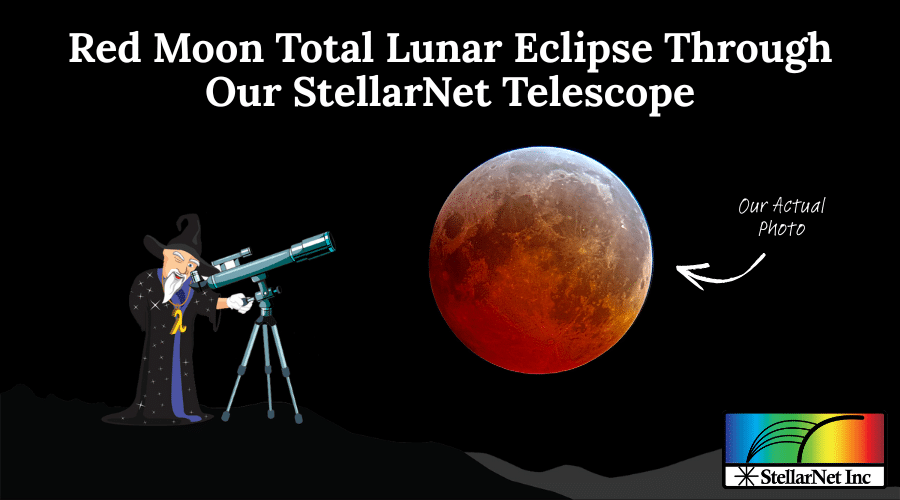
The Moon appears amber or red during a total lunar eclipse due to Rayleigh scattering and the refraction of sunlight through Earth’s atmosphere, the same process that creates colorful sunrises and sunsets. This effect is particularly striking when it coincides with the March Full Moon, known in Native American tradition as the Worm Moon. The name originates from the thawing ground in early spring, when earthworms emerge, signaling the return of birds and warmer weather. When the Worm Moon coincides with a total lunar eclipse, the reddish hue takes on an even more mystical and symbolic significance.
How It Works:
Earth Blocks Direct Sunlight – During a total lunar eclipse, Earth moves directly between the Sun and the Moon, casting its shadow over the Moon. Normally, the Moon reflects sunlight, but during an eclipse, that direct light is cut off.
Atmospheric Filtering & Refraction – Even though direct sunlight is blocked, some light still reaches the Moon after passing through Earth’s atmosphere. As it does, the light is scattered and refracted (bent) toward the Moon.
Rayleigh vs. Mie Scattering: Why Red on Earth, but Blue on Mars?
- Rayleigh Scattering (Earth’s Atmosphere) – On Earth, shorter wavelengths of light (blue and violet) are scattered more than longer wavelengths (red and orange) due to Rayleigh scattering. This is why the sky appears blue during the day and why the remaining red and orange light is what reaches the Moon during an eclipse.
- Mie Scattering (Dust and Mars’ Blue Sunsets) – Unlike Rayleigh scattering, which primarily affects small gas molecules, Mie scattering occurs when light interacts with larger particles, such as dust and aerosols. On Mars, the fine dust particles in the thin atmosphere scatter light differently, allowing longer wavelengths (red) to be scattered away while shorter blue wavelengths remain, giving Mars its eerie blue sunsets.
The Moon Takes on a Reddish Glow – Because Earth’s atmosphere filters out blue light, only the remaining reddish hues reach the Moon, creating the deep coppery glow characteristic of a “Blood Moon.”
Atmospheric Conditions Affect the Color – The intensity of the Moon’s red hue during an eclipse varies based on atmospheric conditions. High levels of dust, volcanic ash, or pollution can make the eclipse appear a deeper, darker red, while clearer skies result in a lighter orange or copper color.
A Cosmic Sunset on the Moon
Imagine standing on the lunar surface during a total eclipse. You would witness a ring of red and orange light surrounding Earth, the combined glow of all the sunrises and sunsets occurring across the planet at that moment. This celestial phenomenon, enhanced by Earth’s atmosphere, is a striking reminder of how light interacts with different worlds, from the deep red hues of our eclipses to the unexpected blue sunsets of Mars.
Other StellarNet Posts
Check out our other posts on astrospectroscopy to explore how spectroscopy helps us analyze celestial objects, from distant stars to lunar eclipses. Dive into the science behind light and discover how our spectrometers reveal the secrets of the universe. Stay tuned for more insights into the cosmos!
World Space Week Spectroscopy with StellarNet
This week (October 4th-October 10th) is World Space Week! At StellarNet, we celebrate space day everyday. Our products are spaced-themed with names such as "BLACK-Comet", "Quasar", "DWARF-Star", and more! Space travel is no stranger to our spectrometers. They've even...
Celebrating Women Astronomers Day!
Today, we come together to honor and celebrate the incredible contributions of women astronomers who have played a vital role in exploring the mysteries of the universe. Their brilliance, dedication, and perseverance have paved the way for future generations of...
March Celestial Events Wonderful for Spectroscopy
All throughout March, unpack those binoculars and set up that telescope to view these celestial wonders. The Orion Constellation is visible to the naked eye in the southern part of the sky throughout the month. Using spectroscopic observation methods, astronomers can...