George Deroco Martins, Lucas Henrique Vicentini Viana de Carvalho, Filipe Vieira da Silva, Rayssa Santos Barbosa, and Maria Cecilia Lemes Santos | ISPRS Annals of the Photogrammetry Remote Sensing and Spatial Information Sciences | July 8, 2026 | 10.5194/isprs-annals-xi-3-2026-757-2026
Abstract
This study evaluated the performance of multispectral (Mavic 3M) and hyperspectral (Blue Wave) data in estimating coffee crop productivity using linear regression, SVM, and neural networks. Forty plots with different varieties were analyzed. Multispectral data showed high correlation with productivity, especially the Red Edge (r = 0.704) and Green (r = 0.644) bands. For hyperspectral data, PRI (r = 0.535), GNDVI (r = -0.394), NDVI (r = -0.33), and CIRE (r = -0.328) were significant, highlighting the negative correlation pattern typically observed in perennial crops. Neural network models applied to hyperspectral data achieved the best performance (r = 0.92; RMSE = 6.6%), surpassing multispectral models (r = 0.84; RMSE = 9.4%).
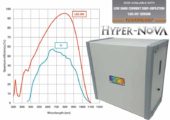
StellarNet equipment used: BLUE-Wave spectrometer
How it was used: The spectrometer supplied hyperspectral crop measurements used to calculate vegetation indices and train coffee-yield models.