A study of five commercial moringa powders found measurable spectral differences and one distinct outlier, while a controlled spinach adulteration study produced a strong quantitative calibration.
Moringa powder may look like a relatively simple botanical ingredient, but products sold under the same name are not necessarily spectrally identical. In a StellarNet study of five commercially available moringa leaf powders, NIR spectroscopy detected subtle differences among most of the products and identified one sample as a clear spectral outlier. When spinach powder was intentionally introduced as a potential adulterant, the spectral changes produced a strong quantitative calibration for predicting adulterant concentration. The results demonstrate how NIR spectroscopy and chemometrics can be used for rapid moringa powder identification, adulteration screening, and incoming raw-material quality control without extensive sample preparation or destructive testing.
Recent moringa recalls and food-safety investigations have made raw-material verification particularly timely. NIR spectroscopy does not detect Salmonella and does not replace microbiological testing, but it can provide manufacturers with an additional screening layer by answering an important question before an ingredient enters production: Does the material we received match the material we expected?
The authentication of commercial moringa products has also been investigated using species-specific analytical methods, reflecting broader concerns surrounding the identity and quality of processed moringa ingredients (Wetters et al., 2024).
Comparing Commercial Moringa Powders with NIR Spectroscopy
To evaluate whether NIR spectroscopy could provide a practical screening tool for incoming botanical ingredients, StellarNet analyzed five commercially available moringa leaf powders representing different brands and suppliers. Each product was measured using a StellarNet NIR spectroscopy system, and the resulting spectra were compared using chemometric analysis.
Although all five products were labeled as moringa leaf powder and appeared visually similar, their NIR spectra were not identical. Subtle spectral differences could be detected among most of the commercial products, while one sample emerged as a clear outlier from the remaining moringa powders.
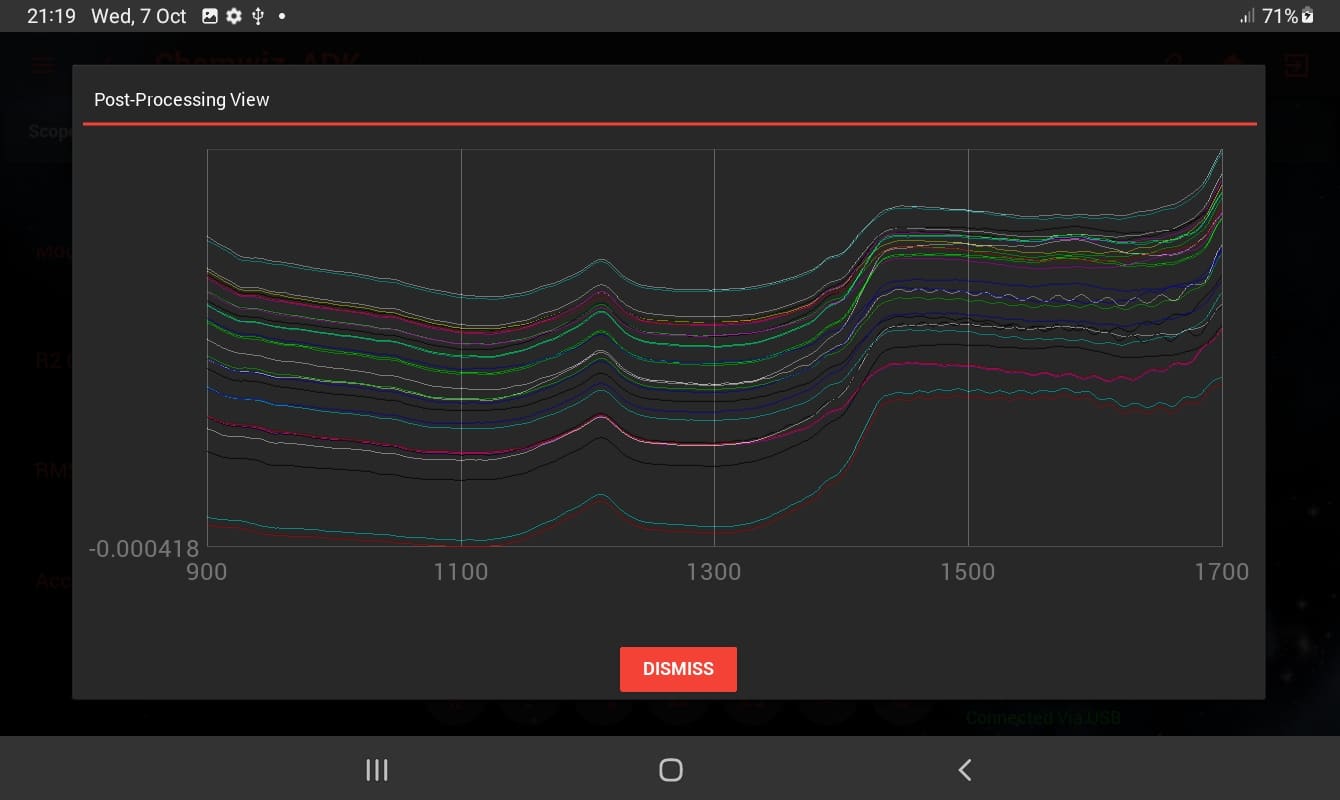
Figure 1. NIR spectra collected from five commercial moringa powders, with three measurements taken from different portions of each sample. Measurable spectral differences were observed, including one distinct outlier.
The cause of the outlier was not investigated and should not be interpreted as evidence that the product was adulterated, unsafe, or otherwise defective. Botanical materials can vary because of growing conditions, geographic origin, harvest, processing, moisture, particle size, storage, and other factors.
For incoming quality control, however, determining that a material is different can itself be valuable. If a manufacturer establishes a spectral fingerprint using previously qualified lots, a new shipment that falls outside the normal spectral population can be flagged for additional investigation before entering production.
Detecting Moringa Adulteration with Spinach Powder
The second portion of the study examined whether NIR spectroscopy could detect and quantify intentional adulteration of moringa powder.
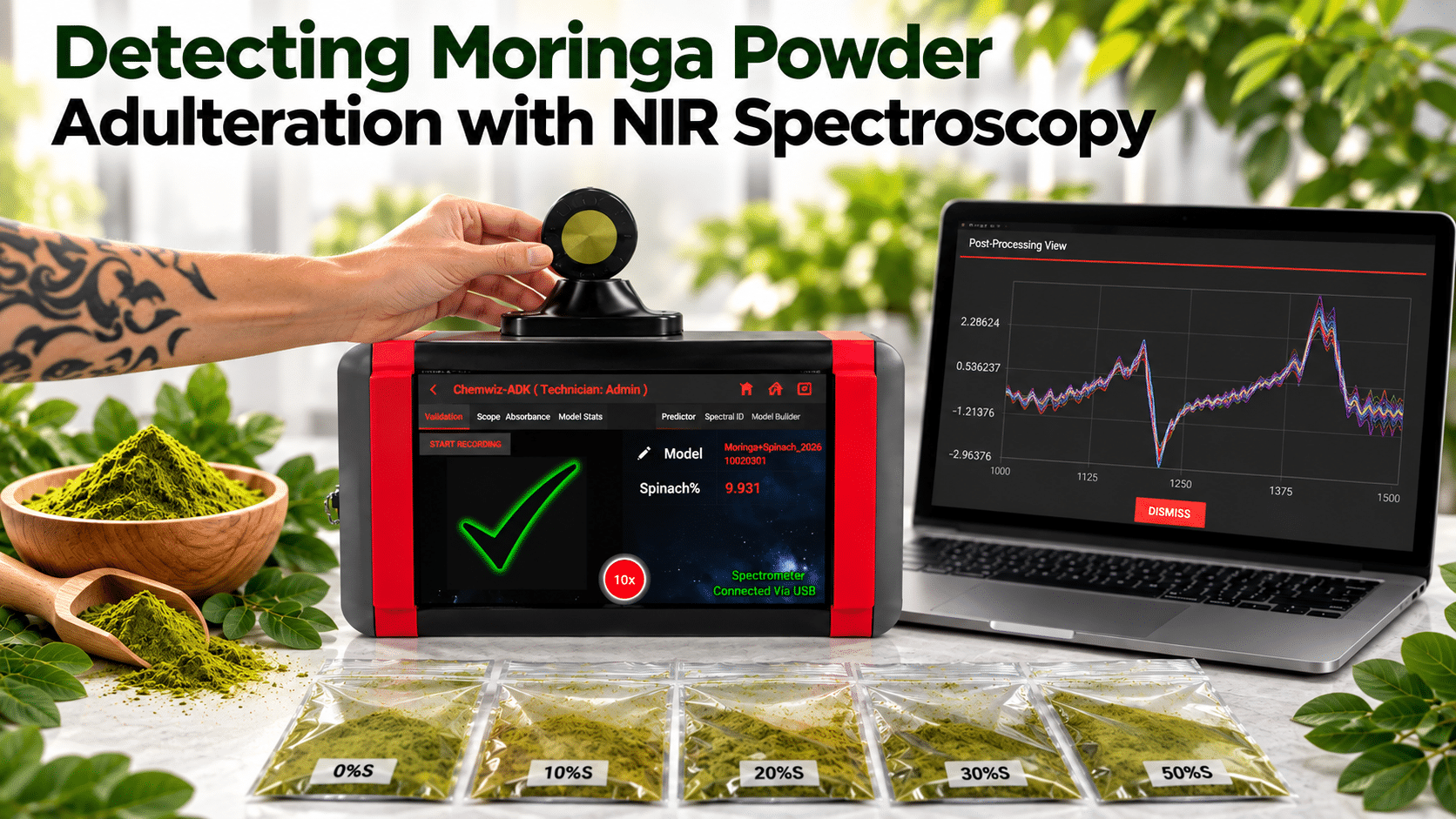
Spinach powder was selected as the adulterant because it is another finely ground green botanical material that can appear broadly similar to moringa by visual inspection. Controlled mixtures containing known amounts of moringa and spinach powder were prepared and measured using the same NIR spectroscopy approach.
As the concentration of spinach increased, systematic changes were observed in the NIR spectra. These differences provided the spectral information necessary to develop a quantitative chemometric model relating the measured spectrum to spinach concentration.
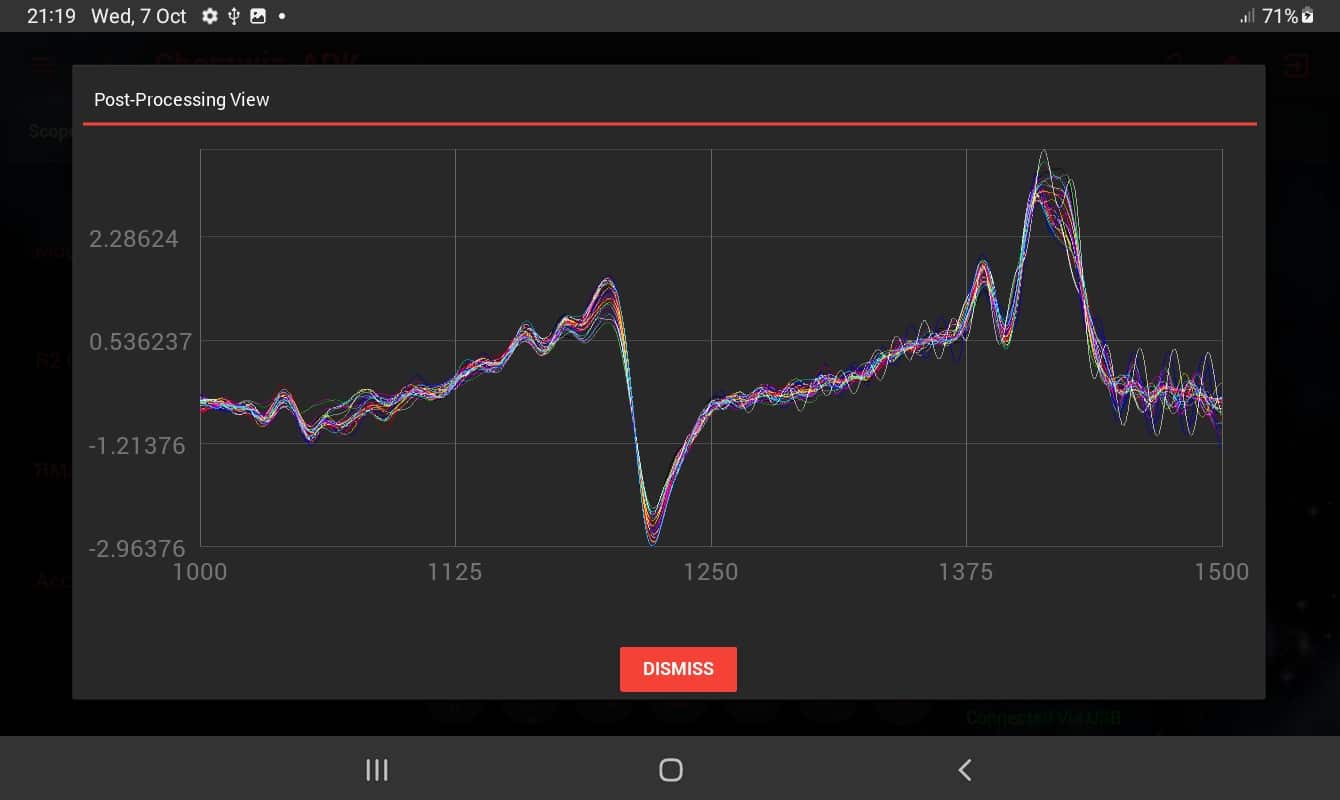
Figure 2. Pre-processing and chemometric analysis of the commercial moringa powders can reveal similarities and differences among samples and identify materials that fall outside the normal spectral population.

Figure 4. Calibration relationship between actual and predicted spinach concentration in controlled moringa-spinach mixtures. The strong relationship demonstrates the potential for quantitative NIR screening of a known botanical adulterant.
Why NIR Spectroscopy Works for Botanical Powders
Near-infrared spectroscopy measures wavelength-dependent interactions between NIR light and a sample. In organic materials such as botanical powders, the resulting spectrum contains overlapping information associated with molecular bonds involving hydrogen, particularly O-H, C-H, and N-H groups.
As a result, an NIR spectrum can contain information related to moisture, proteins, carbohydrates, oils, fibers, and other characteristics of the material’s overall composition. Chemometric techniques can then extract patterns from these complex spectra that may not be obvious from visual inspection or individual wavelengths.
Principal component analysis (PCA) and classification methods can be used to evaluate whether an incoming material resembles previously characterized samples and to identify unusual or outlying materials. Partial least squares (PLS) regression can be used when the objective is to predict a quantitative property, such as the concentration of a known adulterant.
Published research has previously demonstrated the potential of NIR spectroscopy for moringa quality control, including prediction of moisture, protein, and other compositional properties (Rébufa et al., 2018). The present StellarNet study extends that concept toward a practical incoming-material application by examining differences among commercially available moringa products and controlled botanical adulteration.
Spectroscopy combined with chemometrics has also been used to detect and quantify adulteration of Moringa oleifera powder, demonstrating the broader potential of spectroscopic fingerprinting for moringa authentication (El Orche et al., 2025).
From Spectral Fingerprints to Incoming Raw-Material Screening
Together, the two experiments demonstrate complementary uses for NIR spectroscopy and chemometrics.
The commercial-product study showed that powders sold as the same botanical ingredient can exhibit measurable spectral differences and that an unusual sample can be identified as an outlier. The controlled-adulteration study went a step further by demonstrating that known mixtures can be used to build a quantitative calibration for a specific adulterant.
For a manufacturer, the same approach could be incorporated into an incoming raw-material workflow. Previously qualified lots can establish a normal spectral population. New shipments can then be rapidly compared against that spectral history, with unusual materials flagged for additional investigation. When specific adulteration or composition risks are known, targeted quantitative calibration models can also be developed.
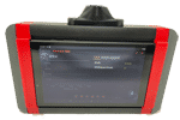
StellarNet’s ChemWiz-ADK Nutraceutical Analyzers combine NIR spectroscopy with integrated chemometric analysis for material identification, classification, composition analysis, and quality-control applications. The approach can be adapted for receiving, laboratory, or production environments and requires minimal sample preparation.
What NIR Can—and Cannot—Tell You About Moringa Quality
Recent moringa recalls provide an important reason to distinguish raw-material screening from pathogen detection. NIR spectroscopy should not be presented as a method for detecting Salmonella in moringa powder, nor should it replace microbiological testing or other appropriate confirmatory laboratory methods.
Instead, NIR provides a rapid measurement of the material actually received. Does its spectral fingerprint resemble previously qualified moringa? Has its composition shifted? Does a new supplier or lot appear different? Is the sample a significant chemometric outlier? If a known adulterant is a concern, can a calibrated model detect and quantify it?
An unusual spectrum does not establish why a material is different. It provides a reason to investigate further.
That distinction makes NIR spectroscopy particularly useful as a first-line screening technique. Rather than replacing conventional analytical methods, spectroscopy can help determine which incoming materials warrant additional attention.
Knowing More Before a Raw Material Enters Production
The results of this preliminary study demonstrate that commercially available moringa powders that appear broadly similar are not necessarily spectrally identical. NIR spectroscopy detected subtle differences among most of the five commercial products tested and identified one distinct outlier. When moringa was intentionally mixed with spinach powder, the changing composition produced systematic spectral differences and a strong quantitative calibration for adulterant concentration.
For food, nutraceutical, and botanical-product manufacturers receiving ingredients from multiple suppliers and lots, NIR spectroscopy can provide an additional layer of information before a raw material enters production. Certificates of analysis provide information about a shipment, supplier qualification provides information about its source, and microbiological and laboratory testing answer specific analytical questions. NIR spectroscopy complements these tools by providing a rapid measurement of the material itself.
The objective is not to replace laboratory testing, but to identify unusual materials sooner and make better-informed decisions about which samples require further investigation. As part of an incoming raw-material screening program, NIR spectroscopy can help manufacturers quickly address a straightforward but important question:
Does the material we received match the material we expected?
Materials Evaluated
Five commercially available moringa leaf powders were evaluated: Organic Moringa Powder, Grenera Organic Moringa Powder, Micro Ingredients Organic Moringa Oleifera Leaf Powder, Kuli Kuli Organic Moringa Leaf Powder, and Terrasoul Superfoods Organic Moringa Leaf Powder. Fraunitsh Spinach Powder was used as the known adulterant for the controlled-mixture study.
The products were evaluated as purchased. No independent reference testing was performed to establish the cause of spectral differences observed among individual commercial moringa products.
Rébufa, C., Pany, I., & Bombarda, I. (2018). NIR spectroscopy for the quality control of Moringa oleifera (Lam.) leaf powders: Prediction of minerals, protein and moisture contents. Food Chemistry, 261, 311–321. https://doi.org/10.1016/j.foodchem.2018.04.066
El Orche, A., El Karbane, M., Ait El Alia, O., Bouchafra, H., Zarayby, L., & Bouatia, M. (2025). Rapid authentication of Moringa oleifera powder: Detection and quantification of adulteration using ATR-FTIR spectroscopy and chemometrics. Food Analytical Methods, 18, 898–910. https://doi.org/10.1007/s12161-025-02761-7
Wetters, S., Sahi, V., Brosche, L., Häser, A., et al. (2024). Monitoring Indian “Superfood” Moringa oleifera Lam.—species-specific PCR-fingerprint-based authentication for more consumer safety. npj Science of Food, 8, 21. https://doi.org/10.1038/s41538-024-00264-z