National Beer Day
Celebrated on April 7th, commemorating the passage of the Cullen-Harrison Act which allowed Americans to legally purchase beer and wine for the first time since Prohibition
A historic moment in brewing
The Cullen-Harrison Act allowed Americans to legally purchase beer and wine capped at 3.2% by weight. This momentous occasion set up the eventual repeal of the 18th Amendment later that year.
On April 7th in brewpubs across the United States, zythophiles, beerophiles, haze bros, and casual drinkers come together to celebrate one of the world’s oldest beverages
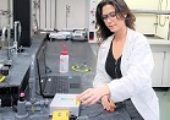
To celebrate, we talked to Ami Parrino, an Advanced Cicerone and microbiologist who runs the laboratory at Florida Ave Brewing.

Can you tell us a little about Florida Ave Brewing and yourself?
Ami: Florida Ave Brewing is a company I’ve grown up with in a lot of ways. I joined right when we opened, and it’s been really rewarding to watch it evolve over the years into what it is today. We’ve always had a strong focus on quality, innovation, and community, and that’s something I’ve tried to contribute to in my own way.
As for me, I’m a microbiologist by training, but I also come from the hospitality side of beer. I’m an Advanced Cicerone and a certified BJCP (Beer Judge Certification Program) judge, so I approach beer from both a scientific and sensory perspective. Outside my brewery work, I teach a quality course for the Brewing Arts Program at the University of South Florida. I also stay involved in a few beer-focused nonprofits and spend as much time as I can traveling with my husband and daughter in search of great beer in unexpected places.
How long have you been with Florida Ave – did you start as a microbiologist in the lab?
Ami: I’ve been with Florida Ave for about 10 years now. I actually started as a bartender when we first opened, so not in the lab at all, as we did not have one. At the time, I made it clear that I had a background in microbiology and that if the company ever built out a lab, I’d love to be the one to take that on.
As the brewery grew, that opportunity eventually came around, and I was able to step into that role and help build the lab program from the ground up.
How does your role as a microbiologist fit into the overall brewing process?
Ami: My role is really centered around quality, consistency, and risk management throughout the entire brewing process. I’m involved in everything from monitoring fermentation to checking finished beer before it goes out the door.
I work closely with the brewing team to make sure everything is performing the way it should, and if something looks off, I help troubleshoot and figure out why. It’s a mix of routine testing and problem-solving, all with the goal of making sure the beer is consistent and true to what we expect.
At what stages of the brewing process is spectroscopy most important – raw materials, fermentation, finished beer, packaging?
Ami: It’s honestly useful at multiple stages, but I’d say fermentation and finished beer are where it becomes most critical for us. During fermentation, it helps track how things are progressing and whether everything is moving in the right direction.
Once the beer is finished, spectroscopy becomes a key tool for confirming that it meets our targets for things like color and bitterness before packaging. It’s less of a frontline tool for raw materials in our case, but it plays a big role in verifying the final product.
How did spectroscopy become a part of the lab’s workflow?
Ami: As we were building out the lab, we wanted tools that could give us fast, reliable data without slowing production down. Spectroscopy made a lot of sense because it allows us to measure multiple parameters quickly and with a good level of accuracy.
It naturally became part of our workflow as we refined our quality program and looked for ways to standardize and streamline testing.
Can you tell us a bit more about the types of spectroscopy you use in the lab?
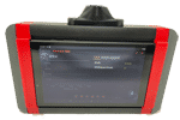
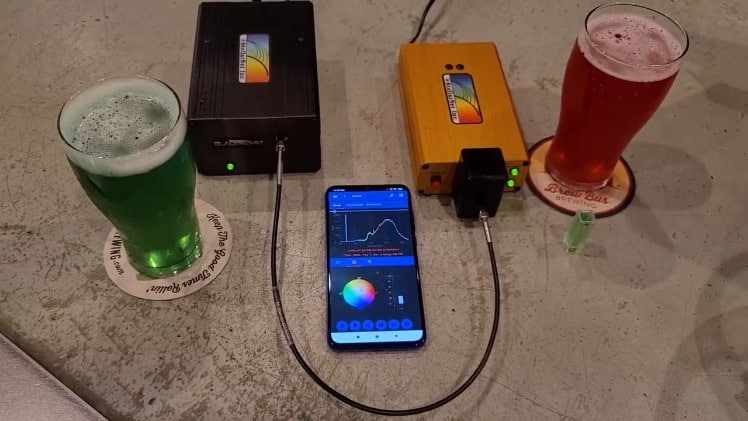
Ami: We primarily use UV-Vis spectroscopy in the lab. My go-to instrument is the StellarNet BLACK-Comet, which I use on a regular basis for a range of measurements.
It’s a really versatile tool that fits well into a brewery setting because it’s relatively quick and adaptable for different types of analyses.
What specific parameters are you monitoring with spectroscopy (like alcohol content, extract, pH, color, haze), and why do they matter for the final bee
Ami: With spectroscopy, I’m most often looking at things like color, IBU (International Bitterness Units), and VDK (vicinal diketones). Each of those plays a big role in how the beer is perceived.
Color is one of the first things a customer notices, so it needs to be consistent with the style and brand. IBU helps us keep bitterness where it should be, which directly impacts balance and drinkability. VDK is especially important from a quality standpoint because elevated levels can lead to off-flavors that we don’t want in the final product.
All of these measurements help us make sure the beer not only meets style expectations but also tastes clean and consistent.
How do your measurements help ensure that different batches of the same beer taste and perform consistently?
Ami: It really comes down to having defined targets and checking every batch against them. By measuring things like color, bitterness, and VDK, we can compare each batch to what we know that beer should look and taste like.
If something starts to drift, we can catch it early and make adjustments before it becomes a bigger issue. At the same time, the human palate is still one of the most important tools we have in the lab when it comes to beer. Sensory evaluation helps confirm what the data is telling us and catches nuances that instruments might miss.
Over time, that combination of analytical data and sensory feedback helps us refine the process and maintain consistency across the board.
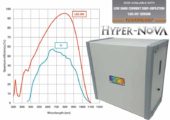
Check out a brewery-ready system!