Abstract
Thermoacoustic oscillations are excited sound waves in systems with large temperature gradients. Thermoacoustic engines and refrigerators can be constructed using porous materials to enhance the acoustic power produced and facilitate heat pumping for refrigeration. Porous materials can also be utilized as catalytic beds to convert between the two spin-isomers of hydrogen: orthohydrogen and parahydrogen. The conversion between ortho- and parahydrogen is either endothermic or exothermic, and the composition of the isomers manipulates the heat capacity of the fluid. This study experimentally investigates ortho-parahydrogen conversion in a thermoacoustic standing-wave engine with different oxidized catalytic materials. Recorded experimental measurements include the onset temperature ratio, acoustic pressure amplitude, and frequency of the thermoacoustic engine. The results depict a relationship between the oxidized materials and the acoustic amplitude. All oxidized materials promoted an increase in acoustic amplitude versus the pure metallic components. Steady-flow conversion was measured for brass oxide and iron oxide pellets; however, no conversion was detected for aluminum oxide or copper oxide pellets. The initial datapoints provide evidence that future cryogenic hydrogen thermoacoustic devices will need to account for the spin isomer conversion inside the stack. New flow-through regenerating liquefiers can also be constructed, which convert orthohydrogen to parahydrogen during liquefaction.
StellarNet System:
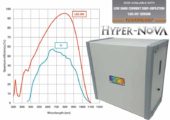
The Raman spectroscopy system utilizes a StellarNet™ (Tampa, FL, USA) Raman HR-TEC-532 spectrometer….

Experimental apparatus for analyzing ortho-parahydrogen conversion.