J Ortyl and R Popielarz – Journal of Applied Polymer Science, 2012
The applicability of 7-hydroxycoumarin-3-carbonitrile (1) and 7-hydroxycoumarin-3-carboxylic acid (2) as fluorescent probes for monitoring of cationic photopolymerization processes by fluorescence probe technique (FPT) was evaluated in comparison to the response of 7-diethylamino-4-methylcoumarin (C1). Triethylene glycol divinyl ether and diphenyliodonium hexafluorophosphate were used as an example monomer and a cationic photoinitiator, respectively. It has been found that the probe 1 withstands the cationic polymerization conditions and provides correct probe response. The probes 2 and C1 undergo side reactions under the cationic polymerization conditions that make them unusable for monitoring of the polymerization progress at high monomer conversions. The application of 1 as an amine-free probe for monitoring of curing progress of photocurable coatings cured by cationic photopolymerization is proposed… monitoring system was composed of a narrow-bandwidth UV light source (which was a UV LED, type: T9B31C, emitting at the wavelength λ max = 320 nm, from Seoul Optodevice, Korea), a miniature CCD spectrometer (EPP2000C, StellarNet, USA) interfaced to a .
Introducing our new Applied Spectroscopy Division
New Handheld Raman!
New! ChemWiz-ADK Handheld NIR Spectrophotometer with on board chemometrics and spectral matching!
Read More
Check out our SpectroChemistry Systems for UV-VIS and Fluorescence Applications
Learn More
New Spectrometer Python Application Driver
for Windows, Linux, RasPi, Mac
Check it out!
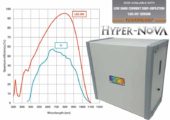
HYPER-Nova Highest Performance Raman Spectrometer
Learn More