P Molina, V Vasyliev, EG Vıllora, and K Shimamura- Journal of Applied Physics. 110, 2011.
The energy transfer processes between Tb3+ and Yb3+ ions are studied in Tb-based fluoride single crystals. These are very transparent from the UV to the IR wavelength regions, except for the characteristic absorption lines of the rare-earth ions under study. In contrast with previously reported Tb3+-doped glasses and oxide powders, these crystals containing a high Tb3+ concentration present two major advantages for the study of the energy transfer processes in the Tb3+-Yb3+ ion pair. Firstly, the adverse influence of host defects is minimized with the use of high quality crystals. Secondly, the high Tb3+concentration guarantees a much higher absorption cross-section of UV light, and consequently these crystals have real potential for practical applications. Photoluminescence spectra in the visible-IR wavelength region demonstrate the existence of efficient down and up conversion processes by crossed excitation and emission characteristics of Tb3+ and Yb3+ ions. In the down conversion process, Tb3+(5D4) → 2Yb3+(2F5/2), two IR photons are emitted for each Tb3+ ion deexcited by second-order energy transfer to two Yb3+ ions. The total quantum efficiency of the down conversion process n the fluoride system is shown to increase linearly with the Yb3+concentration, reaching its maximum at the Yb3+ solubility limit in the fluoride host. Further, efficient up conversion by two- and three-IR photon absorption is observed… The photolumi- nescence was detected with a Peltier-cooled charge coupled device camera and a R5108 photomultiplier from Hamamatsu. The Yb3+ concentration quenching byv auto-absorption was analyzed by means of an optical fiber coupled to a StellarNet spectrometer.
Introducing our new Applied Spectroscopy Division
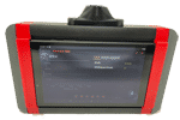
New Handheld Raman!
New! ChemWiz-ADK Handheld NIR Spectrophotometer with on board chemometrics and spectral matching!
Read More
Check out our SpectroChemistry Systems for UV-VIS and Fluorescence Applications
Learn More
New Spectrometer Python Application Driver
for Windows, Linux, RasPi, Mac
Check it out!
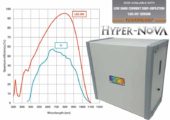
HYPER-Nova Highest Performance Raman Spectrometer
Learn More