A Helmke, D Hoffmeister, F Berge, S Emmert, P Laspe, N Mertens, W Vioel, and Klaus-Dieter Weltmann – Plasma Processes and Polymers.
The inactivation of the Gram-positive bacteria Staphylococcus epidermidis (ATCC 12228) in its vegetative state was studied in vitro after exposure to cold atmospheric pressure plasma generated by direct dielectric barrier discharge (DBD). Compared to UV radiation at 254 nm, plasma UV emission yielded no significant contribution to bacterial inactivation. Analysis of bacterial growth inhibition revealed a pH dependency on growth media. Yet, measurements combined with numerical simulations excluded the pH shift induced by plasma generated reactive species as the main cause of bacterial inactivation. Scanning electron microscopy (SEM) images showed no alteration of cell walls, while fluorescence microscopy revealed lethal damage to cell membranes even after 1 s treatment. When the cell membrane was already severely damaged, also degradation of the bacterial DNA by plasma treatment was found. We conclude that membrane damage due to reactive oxygen species (ROS) and DNA degradation are the main mechanisms of plasma-induced bacterial death that is aggregated by milieu acidification. … Spectroscopy and Fluorescence Microscopy Optical emission spectroscopy (OES) measurements of the plasma and the UV source were carried out using a concave grating miniature spectrometer BLACK-Comet (StellarNet Inc., Tampa, Florida) operating in the wavelength region 190–850 nm.
Introducing our new Applied Spectroscopy Division
New Handheld Raman!
New! ChemWiz-ADK Handheld NIR Spectrophotometer with on board chemometrics and spectral matching!
Read More
Check out our SpectroChemistry Systems for UV-VIS and Fluorescence Applications
Learn More
New Spectrometer Python Application Driver
for Windows, Linux, RasPi, Mac
Check it out!
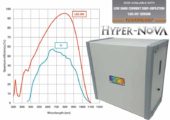
HYPER-Nova Highest Performance Raman Spectrometer
Learn More